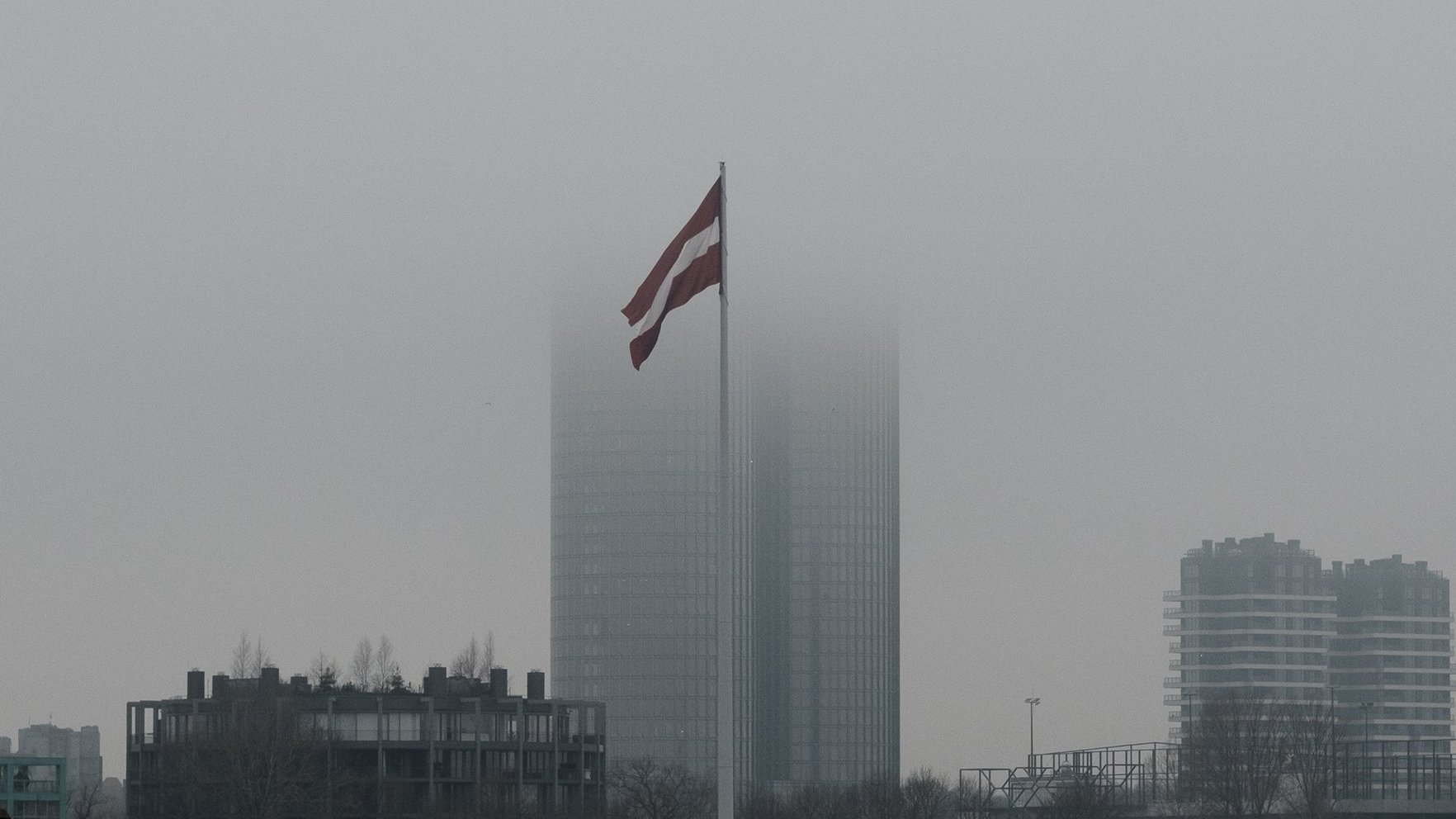
President and PM shift tone as Latvia acknowledges growing Russian threats
After months of cautious rhetoric, Latvia's top officials last week publicly acknowledged an escalation of threats from Russia, linking it to the upcoming Saeima elections. LA.lv columnist Anita Daukšte examines the shift and raises questions about practical crisis readiness.

Since early July, reports have periodically surfaced about a possible escalation of Russian aggression and scenarios designed to test NATO's Article 5. While leaders in Poland and other Western countries spoke openly about this, Latvian officials for a long time limited themselves to general statements about the constant nature of the threat.
That changed last week, when President Edgars Rinkēvičs issued a statement on social media, followed by statements from the Prime Minister on the escalation of threats from Russia. Rinkēvičs said the biggest risks in the coming weeks are tied to the Saeima elections, including possible cyberattacks, migration pressure on the border with Belarus, drone incidents and disinformation campaigns. He said Latvia has requested an increased NATO fighter jet presence for air patrols, an extended Operation "Vilkatis," and stepped-up work by interior and security agencies. The President said a scenario involving a small-scale incursion by Russian special forces into allied territory — intended to paralyze NATO's Article 5 — is being taken seriously, stressing that Latvia's armed forces and NATO units stationed here would respond firmly without waiting for discussions in Brussels. The Prime Minister, meanwhile, sought to reassure the public that there was no talk of a full-scale conventional invasion.
Rinkēvičs also called for revising terminology, arguing that sabotage, terrorist acts and other subversive actions should no longer be labeled as "hybrid threats," since the term creates a misleadingly harmless impression; he said such a doctrinal shift could help mobilize allied support.
In her commentary, Daukšte suggests the change in rhetoric was likely prompted by intelligence information, noting that NATO Military Committee Chairman Admiral Giuseppe Cavo Dragone recently referenced a plan for the eastern flank in case of escalation, and that French intelligence services reportedly now consider autumn 2027 as a possible timeframe for a major Russian escalation against Europe. The author also calls on officials to address more mundane practical questions, such as procedures in the event of a power outage, recalling that crisis plans proved unworkable during August's storm simply because there was no electricity.