Russia's Supreme Court plans jury reform expanding judges' role in deliberations
Russia's Supreme Court is preparing legislation letting presiding judges enter jury deliberation rooms and shrinking jury panels, drawing criticism from lawyers over threats to jury independence.
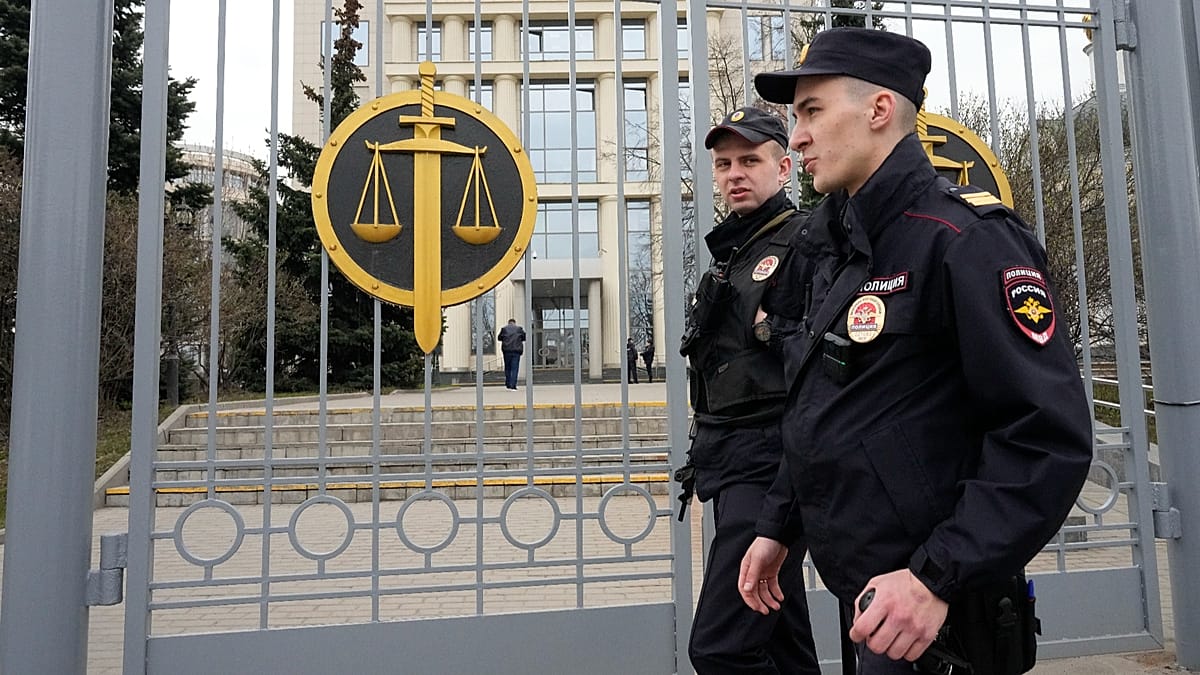
Russia's Supreme Court is preparing legislation that would significantly reshape how jury trials function in the country. The core provisions were outlined by Deputy Chair Nikolai Timoshin and Supreme Court judge Sergei Zelenin, though the draft law has not yet been published.
Under the plan, presiding judges would be allowed to enter the room where jurors deliberate, and jury panels would shrink from six or eight members to four. Judges would not be permitted to vote on guilt but could "clarify" questions that arise during deliberations. Other proposed changes include altering juror selection procedures, allowing citizens over 65 to serve, narrowing the grounds for dissolving an already-formed panel, and granting defendants the right to decline a jury trial even after a hearing date has been set.
Rare but consequential trials
Jury trials remain uncommon in Russia but produce far more acquittals than the system overall. Of more than 640,000 criminal cases heard in 2025, only 643 went before a jury — about 0.1%. In the first half of 2025, 144 of 444 jury-trial defendants were acquitted, close to one in three, according to figures from Professor Sergei Nasonov of Moscow State University of Law. Across the broader Russian justice system, the acquittal rate sits below 0.5%.
Zelenin has argued that the existing jury model leans too heavily on Anglo-American legal tradition and fits awkwardly within Russia's continental legal system, suggesting closer judge-jury interaction, modeled on the European lay-judge system, would bring more stability. Reform supporters also point to the high share of jury acquittals overturned on appeal, cited by the Supreme Court as ranging between 65% and over 80% depending on the year.
Critics counter that such reversals are usually justified by broadly defined procedural breaches — ranging from paperwork errors to remarks treated as improper influence on jurors. Lawyers' main objection concerns letting judges into deliberations, which they say compromises jury independence. A source cited by Current Time said the reform effectively legalizes practices that already occur informally within the justice system.
Jury trials in Russia date back to Tsar Alexander II's judicial reforms of 1864, were abolished during the Soviet era, and were restored in the early 1990s.
/nginx/o/2026/10/01/17948344t1h2e83.jpg)