Russia Strips Rights From Exiled Regime Critics, Leaving Many Uncertain
Russian President Vladimir Putin has signed a law cutting off exiled critics of the regime from consular services and freezing their bank accounts. Rights groups call it the 'civic death law,' and many affected exiles say they still don't know how badly it will affect them.
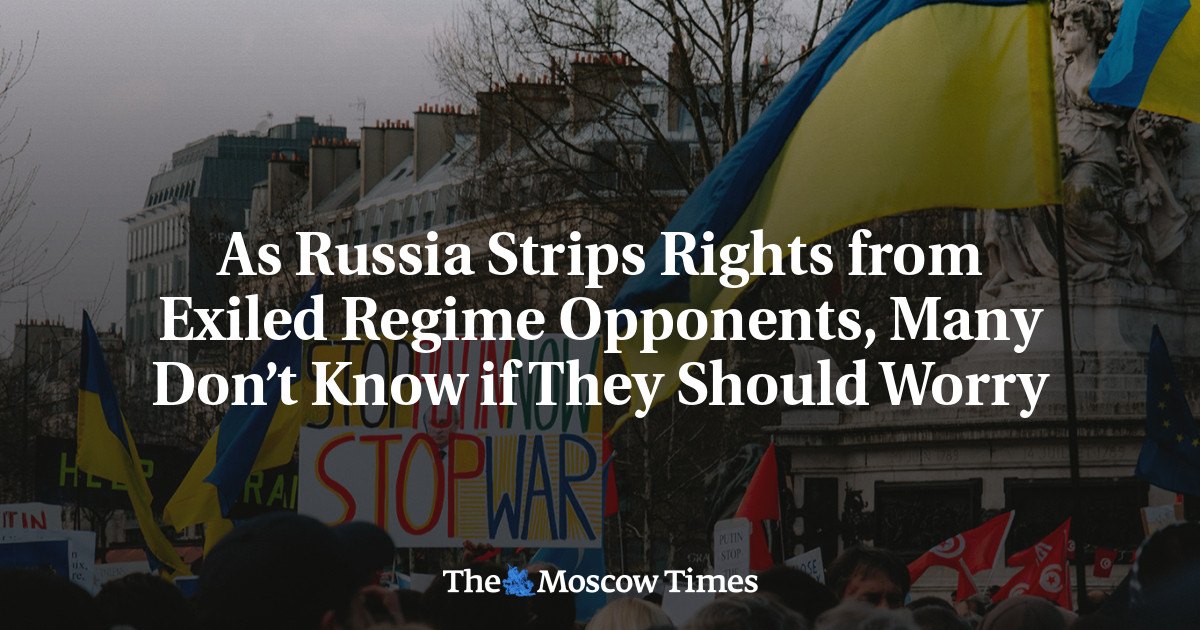
Russian President Vladimir Putin last week approved a sweeping new law imposing severe restrictions on thousands of Russians living abroad who have criticized the government. The law cuts off access to banking, blocks most consular services, and makes it difficult to handle legal affairs back home.
Under the measure, people are barred from managing finances, property and legal matters. Bank accounts will be frozen, embassies will refuse most appointments, and affected individuals will lose access to Russia's digital government services portal, even for tasks as simple as registering a marriage.
Human rights organizations have labeled the legislation the "civic death law," reflecting how severe they consider its impact. It applies to people convicted of a crime or certain administrative offenses while living abroad, who will be added to a public register. Because administrative offenses are included, the law can reach people designated "foreign agents," those who worked with organizations labeled "undesirable," and those accused of "discrediting" the military.
Officials defend the measure, exiles weigh the fallout
State Duma Speaker Vyacheslav Volodin defended the law as necessary justice for state enemies abroad, saying in late July that punishment would eventually catch up with them.
Yevgeny Smirnov, a lawyer with the legal aid group Perviy Otdel, said the law's authors tried to pack in as many restrictions as possible to affect Russians who left the country. He said the toughest consequences will likely come from frozen assets and the loss of basic services, such as the ability to grant power of attorney or finalize a divorce.
Several Russians living in Germany, Armenia and Poland told The Moscow Times they remain uncertain how directly the law will affect them, but are nonetheless worried. Some who cut financial and property ties to Russia years ago say they expect minimal impact.
Advocates point to a similar law already used in Belarus for years to pressure exiled critics of that country's government as a possible preview of how Russia's version could be enforced.