Trees Store Less Carbon Than Expected, Study Finds
A new study reveals that trees may not absorb as much carbon dioxide as previously believed, because photosynthesis does not always convert into wood growth, especially under hot and dry conditions.
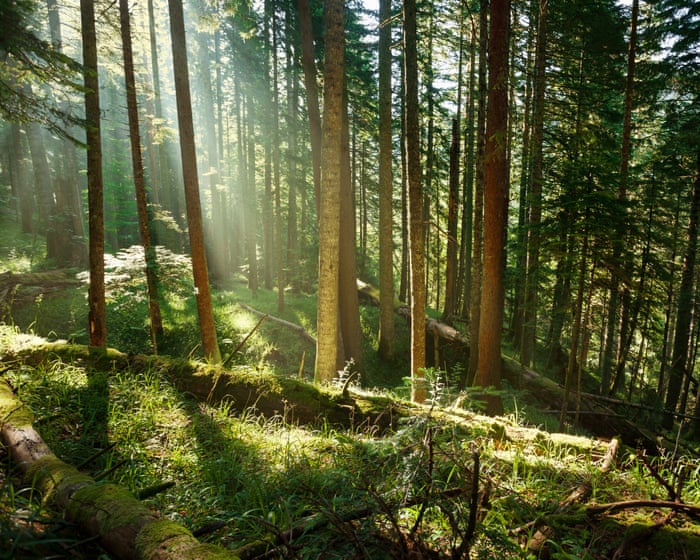
A study of 137 forest sites across the United States has challenged a key assumption about trees' ability to combat climate change. Researchers found that trees stop adding wood months before they stop photosynthesizing, meaning that a significant portion of carbon absorbed is not stored long-term. In the eastern US, about 36% of annual carbon uptake occurred after wood growth had ceased; in California, about 26%. The findings suggest that climate models relying on photosynthesis rates to estimate carbon storage may be overly optimistic.
Lead author Mukund Palat Rao of Columbia University's Lamont-Doherty Earth Observatory said the study shows that "just because there is more photosynthesis might not necessarily mean more tree growth in the future." Wood growth is highly sensitive to aridity and temperature, and as global warming increases the frequency of heatwaves and droughts, the window for growth is shrinking.
The research underscores the importance of understanding how forests function as carbon sinks. Currently, land-based actions like tree planting account for the vast majority of global carbon removal efforts—about 2.2 billion tonnes of CO2 annually, with mechanical methods contributing only 0.1%. If trees allocate more carbon to short-lived uses like leaves rather than wood, their long-term storage capacity could decline.
The team is now investigating whether this decoupling occurs in other tree species and regions. Their paper warns that Earth system models "may overestimate future forest carbon sequestration under rising atmospheric moisture demand."


