The protein that glues cells together turns out to have a second, unexpected job
Researchers found that E-cadherin, a protein complex best known for holding epithelial cells together, also helps those cells engulf nearby dying cells. The discovery could offer new insight into chronic inflammation.
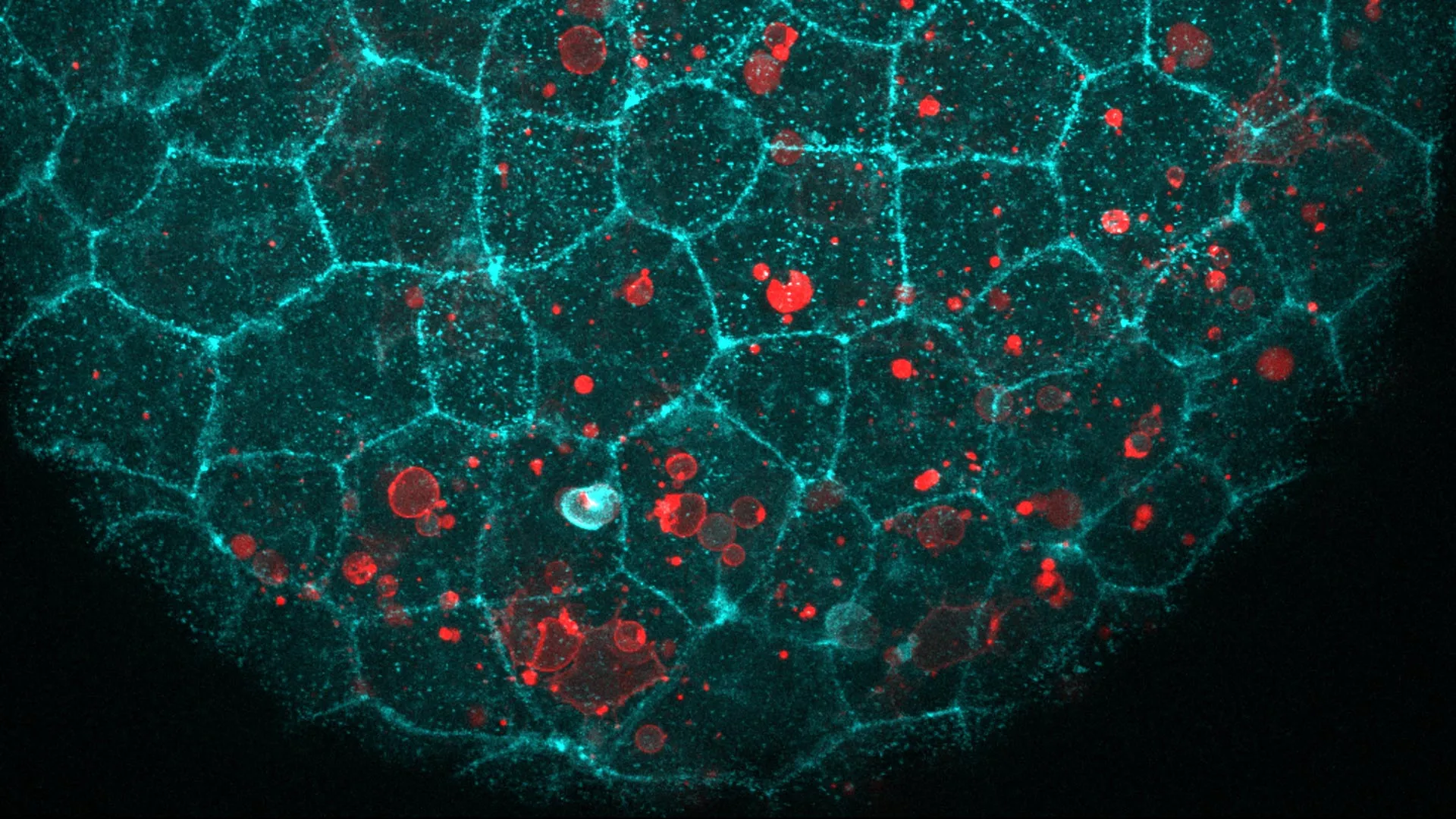
A research team led by Verena Ruprecht has discovered that a protein long known for keeping epithelial tissue connected also performs a very different task: helping clear away dead cells. The study, published in Nature Communications, centers on the E-cadherin complex, a molecular system that normally links epithelial cells in tissues such as skin, gut and airways, giving them structural integrity.
An unexpected finding
While examining living zebrafish and mouse embryos, the team noticed that the same adhesion machinery assembles at the exact point where a dying cell touches the surrounding tissue. Two experiments confirmed the effect was real: epithelial tissue cleared dying cells even when those cells had no E-cadherin at all, and it also engulfed protein-free fat droplets that merely carried the surface signal normally found on dying cells.
Eating without breaking the barrier
Live imaging showed how epithelial cells manage this without compromising their protective function. The lower surface of a cell stretches and wraps around the dying cell, while the upper surface — which maintains the tissue barrier — stays largely unchanged. Ruprecht compared it to dancers linking arms: their upper bodies stay steady while their feet perform complex movements. The researchers also identified two key mechanical parts within the complex: one acts like a rope, transmitting force from the adhesion machinery to the cell's internal skeleton, and without it cells could not engulf dying material at all. Another acts like a brake on the cell's contractile forces; removing it made cells too stiff to clean up debris effectively.
Relevance to human health
Tests in early mouse embryos showed the same E-cadherin-dependent mechanism at work, suggesting it is shared across vertebrates. Whether it also operates in adult tissue, including in humans, remains unknown, though E-cadherin's wide presence and structural similarity across species make it a plausible candidate. Since dead cells that are not cleared can rupture and trigger chronic inflammation, understanding this mechanism could offer new leads for human health research, according to Ruprecht.