Zelensky questions several US decisions on Ukraine at EU summit in Brussels
At the European Council summit in Brussels, Ukrainian President Volodymyr Zelensky questioned US administration decisions, saying they benefit Russia. European leaders also discussed funding for Ukraine, but no agreement has been reached.
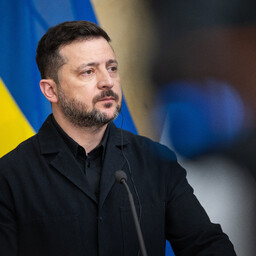
A two-day European Council summit got under way in Brussels on Friday, where EU leaders discussed Ukraine, growing disagreements between Europe and the administration of US President Donald Trump, and Europe's own problems, including in the energy sector. The main event was a speech by Ukrainian President Volodymyr Zelensky, who questioned several decisions by Washington and effectively accused the American administration of acting in ways that benefit Russia and weaken Ukraine's security.
Zelensky said Ukraine cannot agree to deals on diesel fuel supplies and other similar arrangements, because gas deals would follow them. He also complained about a slowdown in the restriction of the speed of the satellite system that helps protect Ukraine. "We do not use Starlink for attacks or retaliatory strikes on Russian territory. That is exactly why we asked SpaceX and the White House to give us such an option. We use Starlink to intercept Shahed jet drones that enter our airspace and strike civilians," Zelensky said.
Sanctions and support
European leaders do not intend to lift sanctions. European Commission President Ursula von der Leyen stressed that Europe will help Ukraine get through a difficult winter. Hungary and Ukraine agreed to restore political and economic relations. Von der Leyen said the EU supported Trump's initiative for an energy truce, but Russia did not observe it for a single minute and instead stepped up its attacks, so pressure on Moscow must be increased.
Money and divisions
European unity is being tested by high energy costs and disputes over the EU's future budget. Despite words of support, Belgium is not ready to use frozen Russian assets: Brussels fears that doing so without reliable guarantees would create obligations and risks for Belgium itself.
Estonian Prime Minister Kristen Michal said the round-table discussion was emotional and long, and that countries hold different positions. Ukraine needs 70 billion euros next year, of which 40 billion is for defence. Borrowing was also considered, but nothing has been fully agreed so far. Leaders will return to the issue in November or December, but it is clear that the money must be found.