SpaceX's IPO: Icarus-like leap or next dot-com bubble?
SpaceX is set for a historic IPO at a $1.75 trillion valuation, potentially making Elon Musk the world’s first trillionaire, but investors must weigh risks as the company lost $5 billion last year and its value hinges largely on AI promises.
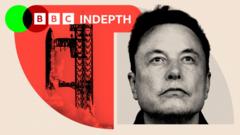
SpaceX, Elon Musk’s space and technology company, will begin trading shares on June 12, offering a portion of its stock to public investors. The banks organizing the IPO have valued the entire company at $1.75 trillion, placing it among the top ten most valuable companies globally. Despite losing nearly $5 billion last year, SpaceX’s valuation has surged more than 40-fold since 2020, from $40 billion to $1.75 trillion.
The company bundles several businesses: rocket design and manufacturing, satellite launches, and the Starlink communications network—profitable and geopolitically important for Ukraine’s defense against Russia. However, the bulk of SpaceX’s $1.75 trillion valuation rests on Elon Musk’s AI company xAI, recently folded into SpaceX. The total addressable market SpaceX targets is $28.5 trillion, of which $26.5 trillion is in AI. This means investors are essentially betting that the AI industry will rival the entire US or European economy.
UK retail investors are likely to receive around £1.5 billion worth of shares. Brokers like Hargreaves Lansdown report a surge in interest. But some analysts are skeptical: economist Sinead O’Sullivan, a former NASA worker, calls SpaceX “an Elon Musk ego project,” noting that most capital spending goes to data centers and AI, not space.
Another concern is Musk’s near-total control. He owns only 42% of shares but, through extra voting rights, controls 85% of votes. He serves as founder, CEO, CTO, and chairman. This control lets him pursue bold visions—space-based data centers, Moon and Mars bases, and pivoting Tesla toward robotics with a target of one billion humanoid robots.
The SpaceX IPO is the largest share sale in history, but it’s just the first of several from AI giants like Anthropic and OpenAI. This raises fears of a dot-com bubble repeat, where unprofitable companies sell shares at inflated prices. However, the rapid growth of index funds could absorb some supply.
Despite risks, many investors fear missing out. Tesla skeptics have already lost out as its shares rose tenfold since 2020 despite stagnant production. The SpaceX share price will likely determine not just Musk’s fortune but also the future of similar tech companies. As one big investor put it: “The cult of Elon Musk requires disciples to pay a premium for the questionable privilege of having no real say in how the company they own is run.”
