Slate electric pickup: Early promises exceeded, but challenges remain
Slate Auto has announced improved specifications for its low-cost electric pickup, but experts point to several limitations, including slow charging and a lack of basic equipment.
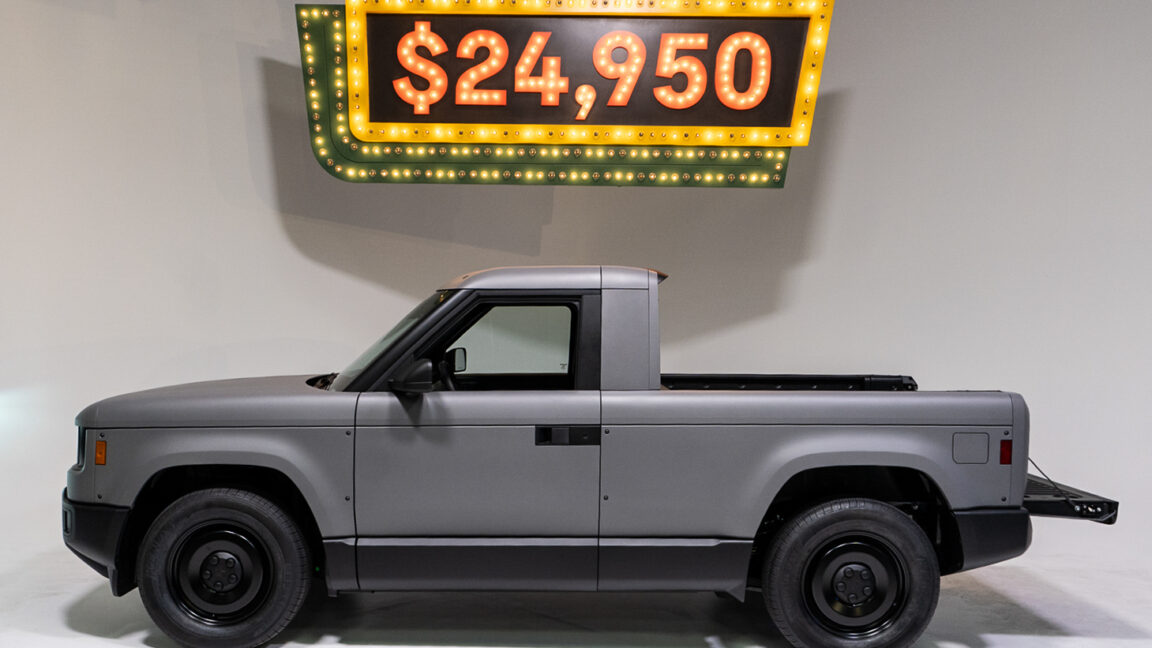
The new Slate pickup: Promises exceeded
Slate Auto has raised the initial promises for its electric pickup. The originally planned range of 180 miles (290 km) has been increased to 205 miles (330 km). Towing capacity has grown from 1,000 lbs (454 kg) to 2,000 lbs (907 kg), and payload from 1,400 lbs (635 kg) to 1,550 lbs (703 kg). These improvements align with the company's strategy of "underpromise and overdeliver," likened to Disneyland's approach.
Test ride and comfort
Journalists were given the opportunity to ride in the pre-production prototype as passengers. Although the vehicle is not fast – acceleration to 60 mph (97 km/h) takes eight seconds, and top speed is 90 mph (145 km/h) – it provides smooth acceleration and good handling. The seats are comfortable, and there are no squeaks or rattles in the interior.
Technical details and charging limitations
The Slate is powered by a 65 kWh LFP battery (63 kWh usable), achieving 3.3 miles/kWh (19.1 kWh/100 km). DC fast charging is limited to 120 kW, and a 20-80% charge takes about 30 minutes. AC home charging is 11 kW, but a full charge from 20% to 100% takes four hours. This slow charging speed may be a drawback for long trips.
Basic equipment and modularity
Slate aims to reduce costs by omitting many standard features. The vehicle has no infotainment screen (only driver cluster), no advanced driver-assistance systems, and no modem. Windows are manually cranked. However, the vehicle is modular – accessories can be added later, including audio systems, roof racks, and wraps. Slate expects 80% of over 200 accessories to cost less than $500.
Delivery and market outlook
Slate has received 180,000 deposits ($50 each), of which 10,000 have been converted to pre-orders. Annual production capacity is 150,000 vehicles, with first deliveries starting in Q4 2026. However, if demand falls short, the company may struggle to survive into 2027.

