Political Scientist Rajevskis: Latvia Does Not Have to Support All Egyptians
Political scientist Filips Rajevskis argues that Latvia can choose whether to let in illegal immigrants, and many of them abuse social guarantees rather than flee war.
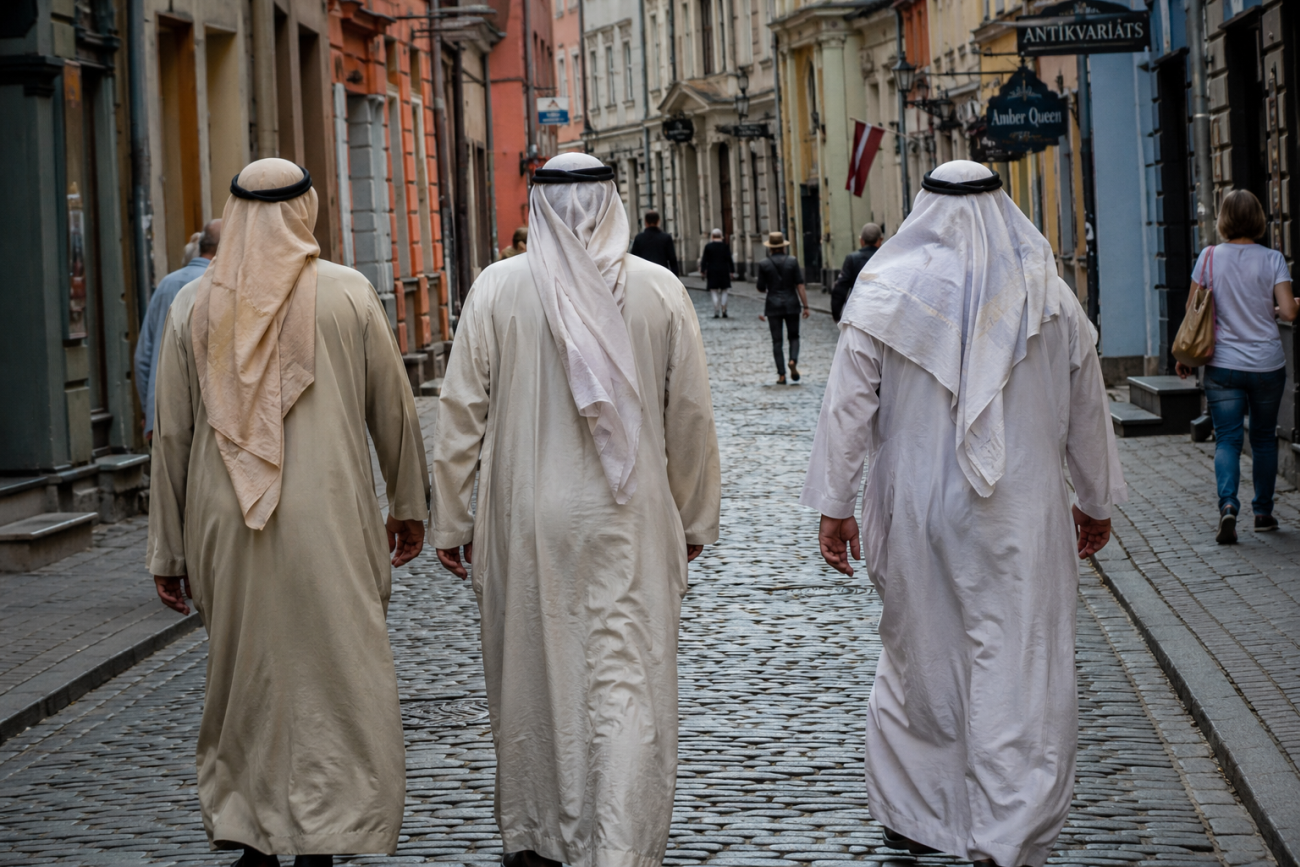
This week, Interior Minister Jānis Dombrava announced the need for a strict algorithm to identify and deport illegal immigrants who pose as asylum seekers after illegally crossing the border. He stated that asylum centers are overcrowded and that these people 'mock' European humanism, freely carry knives, and turn the environment into a dump.
Political scientist Filips Rajevskis, co-owner of Mediju tilts, explained to BNN that Latvia is not obligated to admit everyone. 'Border protection is our own responsibility—whether we let them in or not and what we do with these illegal immigrants,' Rajevskis emphasized. He agrees that migrants abuse human rights standards and social guarantees because they have no interest in integrating or working. Their main goal is to get into Europe and avoid being sent back.
Rajevskis noted that migrants come from Somalia, Egypt, Afghanistan, Pakistan, and Bangladesh. While Somalia is dangerous, Egypt is not at war—it simply has a lower standard of living and overpopulation, but people live normally. 'Egypt has 100 million inhabitants—if we wanted to raise them to European standards, there wouldn't be enough money,' the political scientist said.
Rajevskis supports Dombrava's approach, stressing that Latvia must avoid Western Europe's mistakes to maintain street safety and prevent attacks on women and children. He contrasted Ukrainian asylum seekers, who either integrated or returned home, rather than just waiting for benefits.
Rajevskis also commented on State Revenue Service director Baiba Šmite-Roķe's statement that political decisions on e-cigarettes promoted smuggling. He compared it to alcohol prohibition: people buy them in Lithuania or Estonia or on the black market, and the state loses control over quality, creating health risks. 'The ban poses even greater health risks because counterfeit products are used,' Rajevskis concluded.

/nginx/o/2026/10/15/17974852t1h3278.jpg)