Five Lupus Patients in England Achieve Remission After Pioneering NHS Trial of Genetically Modified Cell Therapy
Five patients with severe lupus who had not responded to previous treatments achieved remission after receiving CAR T-cell therapy, which genetically modifies their own immune cells. The method, already revolutionary in cancer treatment, could offer hope for a cure to autoimmune disease patients.
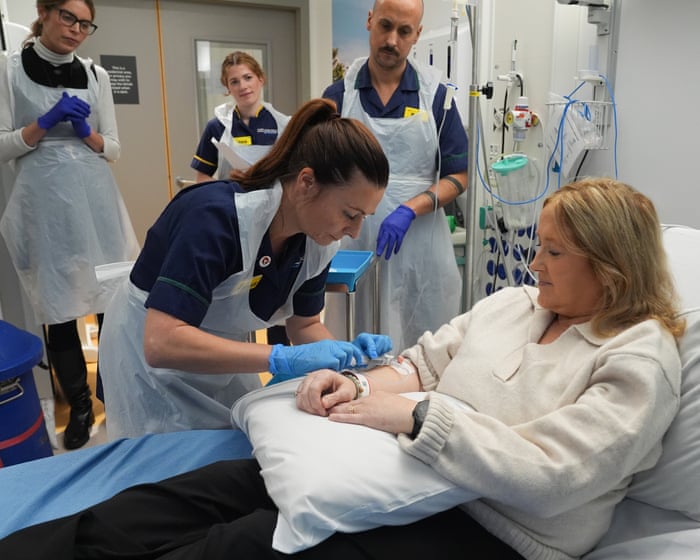
Breakthrough in Lupus Treatment
A clinical trial conducted by the UK's National Health Service (NHS) has resulted in five patients with severe lupus entering remission after receiving a groundbreaking therapy that genetically modifies the patients' own cells. Doctors describe this as a medical breakthrough that could transform the treatment of the chronic autoimmune disease.
The study was led by University College London Hospitals NHS Foundation Trust (UCLH) and University College London (UCL). Nine patients with severe lupus who had not responded to any prior treatments were recruited. Most of them suffered from lupus nephritis, a serious kidney complication.
How CAR T-Cell Therapy Works
CAR (chimeric antigen receptor) T-cell therapy involves removing a type of white blood cell called T-lymphocytes, genetically engineering them to recognize and destroy diseased cells, and then infusing them back into the patient. The therapy is administered only once and aims to reset the immune system.
Results and Patient Experience
Six patients received a lower dose of CAR-T cells, and five of them achieved remission within just a few months. These patients were followed for an average of 11 months. Three patients who received a higher dose have been followed for only three months so far, but doctors believe they may also achieve remission. Tests showed rapid improvement in disease markers, including stabilization or improvement in kidney function.
One patient, Katie Tinkler, a 52-year-old from Guildford, Surrey, had suffered from severe lupus since age 20. The disease affected her joints, kidneys, lungs, and heart, causing chronic pain and fatigue. She had to give up her job as a fitness instructor. After the therapy, she is now in remission and has returned to an active life, skiing for the first time in a decade and dancing at her daughter's wedding. "My life before and after is like night and day," she said.
Expert Opinion
Prof Karl Peggs, director of UCLH's Biomedical Research Centre, emphasized that while larger studies are needed, CAR T-cell therapy could offer patients the possibility of a cure. "These findings are truly groundbreaking and offer new hope to people living with lupus. If these results are confirmed in larger studies, the prospect of a cure may no longer be out of reach," he stated.
Significance and Future Outlook
Lupus is a chronic autoimmune disease affecting approximately 5 million people worldwide, predominantly women. It causes widespread inflammation and can damage vital organs. Current treatment often requires lifelong medication, so a one-time therapy that resets the immune system would be a major advance.


/nginx/o/2026/10/19/17982291t1hbb36.jpg)