Ombudsperson report: migrants in Lithuania face collective punishment and de facto detention
A Seimas Ombudsmen's Office report finds that many residents of Lithuania's Pabradė reception centre face collective movement restrictions amounting in practice to detention. The Reception and Integration Agency acknowledges past shortcomings but says conditions have since improved.
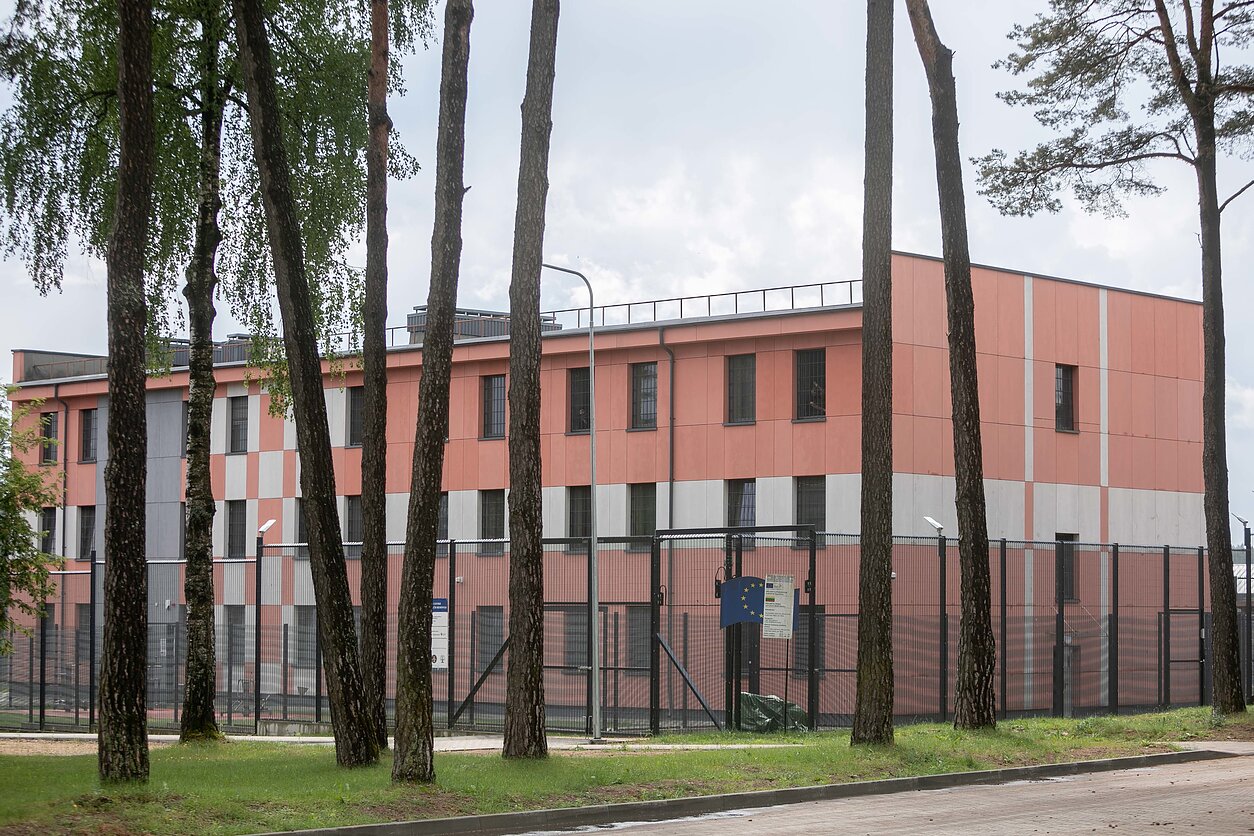
An almost 100-page report by Lithuania's Seimas Ombudsmen's Office has revealed serious problems at the country's migrant accommodation facilities — the Pabradė Reception Centre, run by the Reception and Integration Agency, and the Foreigners Registration Centre, operated by the State Border Guard Service.
Collective restrictions
Seimas Ombudsperson Erika Leonaitė said violations by individual residents had repeatedly led to movement restrictions being imposed on entire groups. As of November 2025, only 26 of the centre's 170 residents were free of any restrictions, meaning roughly 85 percent faced some limitation. Residents on the third and fourth floors fared worst: inspectors found locked doors, unstaffed corridors, and cases where individuals were confined entirely to their rooms, unable even to step into the hallway.
Leonaitė said the practice contradicts both international human rights norms and Lithuania's Constitution, which holds that freedom is a person's natural state — yet for foreigners in Lithuania, restriction comes first and easing follows only later. The agency confirmed that collective measures had been used for safety reasons and to manage infectious disease outbreaks in the past, but said such practices have since been discontinued and procedures revised.
Food, information and language barriers
The report also documented insufficient caloric intake for some residents, gaps in medical and psychological care, and inadequate information provided in residents' native languages, with some unaware of their rights or how to file complaints. The agency said interpreters for Arabic, Urdu and Pashto have been permanently based at Pabradė since June, and a mobile app for information-sharing is under development.
Leonaitė noted that Lithuania still falls short of EU standards for treating migrants, though she welcomed a shift in attitude among state institutions, which she said no longer question whether human rights must be upheld but focus on how to implement them. Some shortcomings, such as hygiene supplies and clothing, have already been addressed, while harder issues — including accessibility for people with disabilities and ending isolation practices — remain unresolved.