Occupied Sevastopol public transport receives only quarter of needed fuel
Public transport companies in occupied Sevastopol are getting only a quarter of the fuel they need, leading to canceled bus routes and reduced intercity service by 80%. Fuel costs have more than doubled the contracted price.
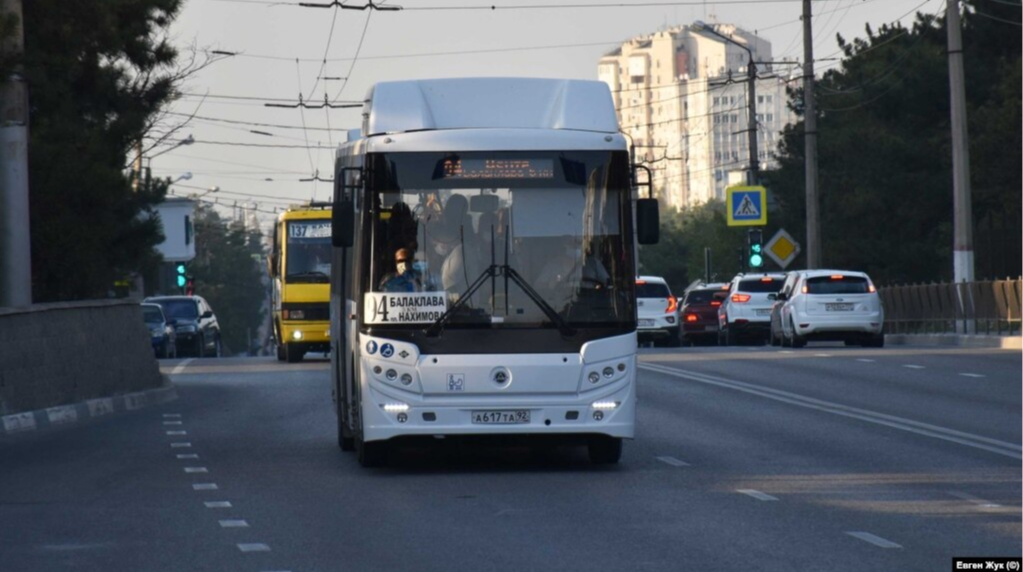
According to Krym.Realii, a Radio Liberty project covering life in occupied Crimea, passengers in Sevastopol have been struggling for days to board the limited public transport that remains operational.
The pro-Russian portal Forpost reports that trolleybuses are running intermittently due to power outages, some bus routes have been canceled, and service intervals have increased. Viktor Rykov, head of the Russian Union of Transport Companies of Sevastopol, stated that transport enterprises are currently allocated only a quarter of the fuel they actually need. Some are using their own modest reserves with partial help from the Russian occupation authorities, even though fuel prices have long exceeded the figures set in their contracts. The contracts assumed a price of 76 rubles ($0.96) per liter, while the current price is 145 rubles ($1.84) per liter.
Rykov added that fuel shortages have reduced not only urban transport but also intercity transport by 80%. Vehicles operated by the state-run company Sevelectroavtotrans, which run on natural gas, do not have to queue, but buses from private companies must wait at gas stations alongside taxis and cars.
Russian-appointed head of Sevastopol, Mikhail Razvozhayev, previously said that government and public transport vehicles would be refueled at gas stations. He also stated that public transport would continue running during air raid warnings, with buses and trolleybuses making brief stops to allow passengers to take shelter if needed. However, he emphasized that ferries would not operate during such warnings because the decision to close the roadstead lies with the Black Sea Fleet, but alternative routes would be arranged for passengers.
Earlier, Russian occupation authorities declared a regional state of emergency in Crimea and Sevastopol. Gas stations across occupied Crimea, including those belonging to major networks, have begun closing en masse. Local authorities said they do not know when free sale of gasoline and diesel will resume, as fuel supplies are being "regulated" by the Armed Forces of Ukraine. Since the beginning of 2026, Ukraine has carried out over 20 strikes on Russia's oil infrastructure.