US allies uneasy as capricious Trump shifts stance at NATO summit
President Trump's volatile behavior at the NATO summit in Ankara, swinging from aggressive criticism to conciliation, has alarmed allies and raised questions about the alliance's future.
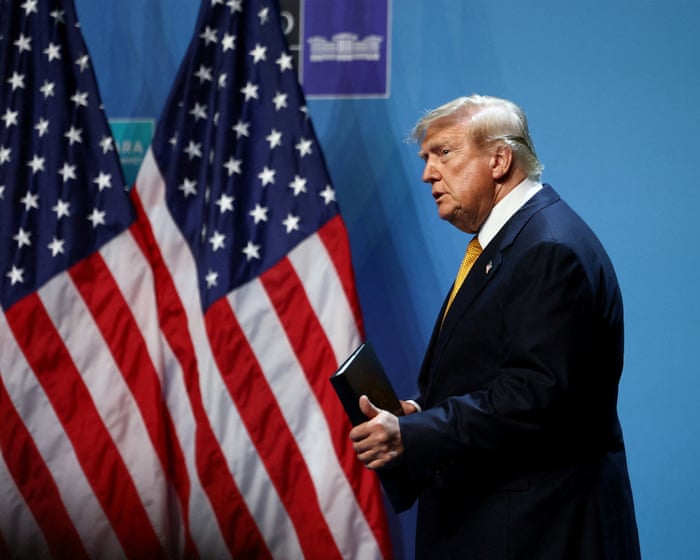
Donald Trump's relationship with NATO allies has never been harmonious, but his performance at the annual summit in Ankara this week was extreme even by his standards.
Arriving in a fouler mood after a ceasefire with Iran collapsed, Trump attacked Iranian leaders as "scum" and "sick people" and lashed out at NATO, complaining that members—including Britain—had not helped him in the Iran war. He revived claims on Greenland, demanded the US cut trade ties with Spain, and declared himself "not happy with NATO."
Hours later, however, after meeting with the same leaders, he praised the summit's unity, saying, "There was a lot of love in that room." He extended this warmth to Ukraine's President Volodymyr Zelenskyy, whom he had previously dismissed, calling him "ingenious" for holding his country together against Russia.
Analysts point to multiple factors behind Trump's abrupt change.
One may be his affinity for the host, Turkish President Recep Tayyip Erdoğan, whom Trump has long admired. Trump stated he might not have attended if not for Turkey, calling it "much more loyal" than other allies. Ian Lesser of the German Marshall Fund noted a "bipolar quality" to the summit, driven by Trump's chemistry with Erdoğan, which helped prevent theatrics from derailing the event.
NATO Secretary-General Mark Rutte, who has mastered the art of soothing Trump with praise—calling him the "savior" of NATO—also likely played a role. Charles Kupchan, a former White House adviser, suggested Rutte's message that allies are increasing spending resonated during closed sessions.
Trump's sudden shift toward Zelenskyy may stem from disappointment in Putin for refusing concessions and from awareness of congressional sentiment ahead of midterm elections.
Long-term implications
Some observers worry that Trump's regular bashing of allies leaves a permanent mark, even if a future administration adopts a more traditional approach. Kupchan, however, argues NATO remains intact, with 80,000 US troops still in Europe, but predicts the alliance will become more European-led as members meet their 2025 defense spending target of 5% of GDP.
"The underlying problem is the collapse of the political center—the US doesn't really have a foreign policy anymore," Kupchan warned. "If you're the chancellor of Germany or prime minister of Japan, you have to plan for the worst because you don't know if you can count on Uncle Sam."
Trump's mercurial style keeps allies "freaked out," says Kupchan, but beneath the posturing lies a deeper US strategic indecision. The Ankara summit highlighted both the personal dynamics shaping Trump's foreign policy and the systemic uncertainty facing NATO.