NATO deputy commander: alliance ready to strike if defense requires it
NATO's deputy supreme commander in Europe, Sir Johnny Stringer, said in an interview that the alliance would strike targets on enemy territory if needed to defend its members. He stressed years of planning have focused especially on defending the Baltic states.
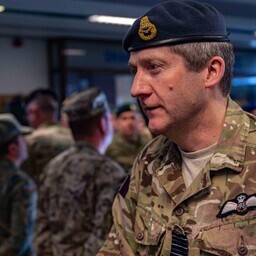
NATO's Deputy Supreme Allied Commander Europe, Air Chief Marshal Sir Johnny Stringer, told the newspaper Postimees that the alliance would be prepared to strike targets on another country's territory if that were necessary to defend its member states. He gave the interview during Estonia's ongoing Defense Week.
Stringer said that while NATO remains a defensive alliance, defending itself sometimes requires attacking. He declined to give any timeline for a potential Russian attack, saying he would not engage in discussions about whether such a threat was months or years away. He noted that a large-scale attack would likely give NATO clear warning indicators, whereas smaller operations could be organized much faster, which is why constant readiness is required.
Focus on the Baltics
The commander said NATO has spent several years building deterrence and defense plans for the entire Euro-Atlantic area, with particular attention paid to defending the three Baltic states. Asked whether deep strikes into Russian territory might be needed, Stringer said that if NATO found itself in a military conflict, striking targets to guarantee the security of European countries is exactly what the alliance would do.
He also remarked that Russia's so-called "three-day special operation" has now dragged into its fourth and a half year and has not turned out well for President Vladimir Putin.
Hybrid threats and drones
On hybrid threats that fall below the threshold for Article 5 collective defense, Stringer said a military response is only one element of a broader collective response, noting that member states can also impose sanctions and expel diplomats.
Stringer recalled that he served as NATO's air and missile defense commander last September, when the alliance shot down drones over Poland for the first time. He said the rules of engagement and authorization procedures involved are clearly defined. He added that NATO has since refined its approach further in response to the evolving threat, saying a new approach is coming, though he could not share details.


