Nasa plane to chase rare eclipse over Iceland for solar science data
On Wednesday, a Nasa research aircraft will fly high above Iceland to outrun the moon's shadow during a total solar eclipse, capturing rare images of the sun's outer atmosphere. The data could help explain why the sun's corona is far hotter than its surface.
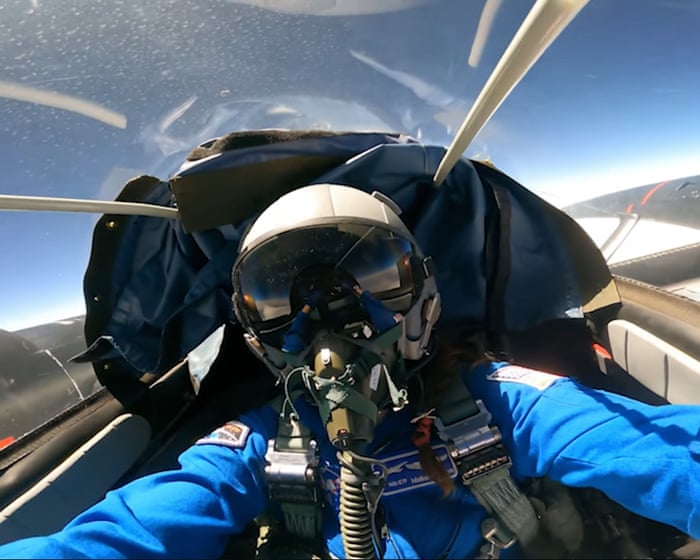
On Wednesday afternoon, two Nasa aviators will take off from Keflavik airport in western Iceland aboard a WB-57 research aircraft, a plane derived from the old English Electric Canberra bomber design. Cruising at roughly 50,000ft (15,000 metres) above the clouds, about 40 miles (64km) off the Icelandic coast, the crew will attempt to keep pace with the moon's shadow as it races across the ocean at over 2,000mph (3,200km/h).
For observers on the ground, totality will last around 2 minutes 18 seconds. But by flying at 460mph along the eclipse's path, the pilots can stretch their own observation window to nearly three minutes.
Cameras in the nose
Four cameras hidden in the aircraft's nose cone will capture dozens of images per second across different wavelengths of light. Scientists hope to photograph looping ribbons of solar plasma known as prominences, along with tiny magnetic explosions called nanoflares that are only visible once the sun's blinding disc is blocked.
Despite their modest name, nanoflares release energy equivalent to thousands of atomic bombs and are thought to partly explain why the sun's outer atmosphere, the corona, reaches temperatures above 1,000,000C while the surface sits at only around 6,000C.
Dr Amir Caspi of the Southwest Research Institute, the mission's principal investigator, said aircraft offer advantages that ground- and space-based observation cannot match: no clouds or atmospheric interference, and the ability to send back far more data — expected to reach terabytes this time.
A history of chasing shadows
Similar efforts have been made before. In 1923 the US navy sent biplanes to observe an eclipse without much success, while in 1973 scientists persuaded engineers to cut holes in the roof of a Concorde prototype, allowing it to track an eclipse shadow over the Sahara for 74 minutes.
Researchers say a better understanding of solar activity feeds into knowledge of space weather, which affects satellites, power grids and communications on Earth.