Latvian PM: Ukrainian Drone Experts to Arrive in Latvia Next Week
Latvian Prime Minister Andris Kulbergs announced that Ukrainian military experts will arrive in the Baltic states next week to help address repeated drone incursions. He also emphasized the need for rapid anti-drone measures and linked economic strength to national defense.
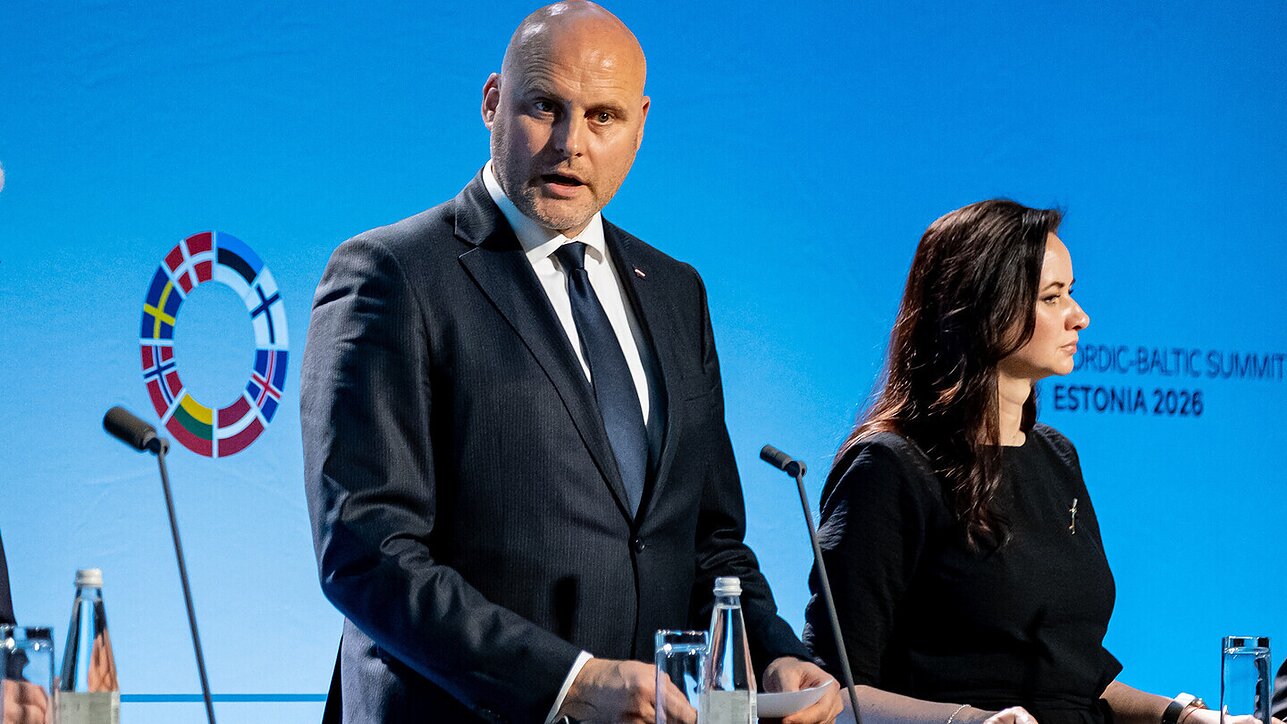
Latvian Prime Minister Andris Kulbergs told Estonian ERR News that Ukrainian experts will arrive in the Baltic states next week to help deter threats from repeated drone violations. Several Ukrainian drones have breached Latvian airspace this year, likely pushed off course by GPS jamming as Russia protects its oil infrastructure. On Monday, a drone was shot down in Latvian airspace by a French jet deployed to Lithuania's Baltic Air Policing mission. Kyiv has promised to send experts to the region.
Kulbergs, who took office this week after the previous government collapsed partly over the issue, signed a "drone deal" with Ukraine's Volodymyr Zelenskyy on the sidelines of the Nordic Baltic prime ministers' summit in Tallinn on Tuesday. "And next week, the military experts from Ukraine, the ones who fought on the front and have full knowledge, will assess the Latvian situation," he told ERR News. "We will know what technical equipment is necessary to protect our skies to the best level." He told Estonian newspaper Postimees that anti-drone systems from Ukraine may arrive in Latvia later this year.
Kulbergs repeated Zelenskyy's claim that 35,000 Russian soldiers had been killed or injured in the last month and that 93 percent were "eliminated" by drones. He stressed that both Latvia and NATO must move "rapidly" to address the problem. "Our conventional NATO way of fighting things is not efficient, and we need to move to someone who knows best in the world how to do that," he said, referring to Ukrainian expertise.
On the economy, Kulbergs said countries bordering Russia and Belarus have been directly and tremendously affected by the war. "But if we will have weak economy, that means we will have weak defense," he said, calling for EU-level measures beyond financial support.
The prime minister also called for more sanctions on the shadow fleet, describing it as an "immediate threat" and a "ticking time bomb" that could cause an ecological catastrophe in the Baltic Sea. He urged better information sharing and joint responses.
Regarding Rail Baltica, Kulbergs said Latvia's section requires an additional €3.7 billion and needs "out of the box" ideas. He mentioned "scaling down" the project, comparing it to switching from a Bentley to an Opel. He called on Baltic states to stop blaming each other and collaborate efficiently.

/nginx/o/2026/08/31/17886788t1h22ff.jpg)
