Cryptocurrencies Increasingly Influence Global Politics
From Trump to Farage and Milei, cryptocurrencies are reshaping political landscapes worldwide, raising concerns about conflicts of interest and foreign interference.
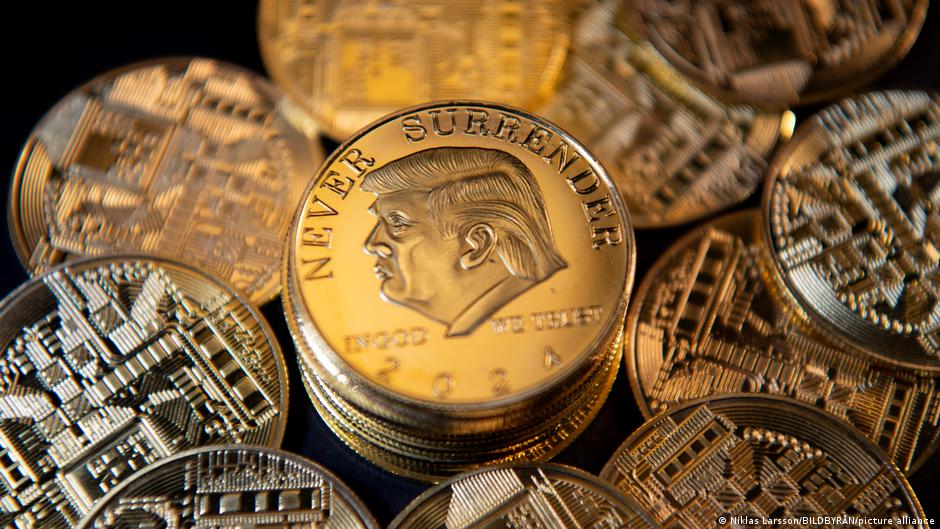
In 2021, Donald Trump called cryptocurrency "a disaster waiting to happen" and a "scam." Yet, according to financial disclosures released Tuesday, digital decentralized currency made him over $1 billion in 2025 alone. Most profits came from his World Liberty Financial business, which sold new crypto products ($500 million) and so-called "meme coins" ($600 million). This coincides with the US president's increasingly favorable crypto policies, including deregulation and federal rules for stablecoins.
Trump is not alone in backing crypto as the future of finance. In the UK, populist leader Nigel Farage faces public backlash threatening his Reform UK party's rise after a £5 million personal "gift" from Thailand-based British crypto billionaire Christopher Harborne was revealed. Reform UK has a pro-crypto stance, with Farage promising to "bring crypto in from the cold" if he wins power.
In Czechia, former Justice Minister Pavel Blazek resigned last year after accepting 468 bitcoins worth $45 million from convicted criminal Tomas Jirikovsky. Spanish right-wing MEP Luis "Alvise" Perez Fernandez has been accused of taking crypto financing from a convicted fraudster. In Argentina, President Javier Milei faced criticism from financial authorities and the public for promoting the boom-and-bust crypto scheme $LIBRA, which spiked after his social media post and collapsed soon after.
Crypto's political influence is growing. Eliza Lockhart, senior research fellow at RUSI, told DW that crypto is becoming significant not just as political donations, but as a well-resourced industry shaping regulation, a source of personal wealth, and a financial technology that moves value rapidly across borders. The anonymity of blockchain makes tracking donations harder, increasing risks of foreign interference. A 2025 Chainalysis report found European extremist groups' crypto use nearly reaching US levels, with Europe's share rising to almost 50% of total inflows from 2022 to 2024.
While crypto is not inherently right-wing, Pew Research shows that in the US, 22% of Republicans versus 17% of Democrats have invested in or used cryptocurrency. Lockhart noted that the crypto industry's alliances often lean right, reflecting a preference for deregulation. Regarding conflicts of interest, Trump's spokesperson Anna Kelly said his business interests are managed by his sons and that neither the president nor his family has ever engaged in conflicts of interest.