Crimea Declares State of Emergency After Ukrainian Attacks Target Energy Grid
Russian-backed authorities in occupied Crimea declared a state of emergency on Friday following days of Ukrainian strikes that caused power outages, water supply issues, and transportation disruptions.
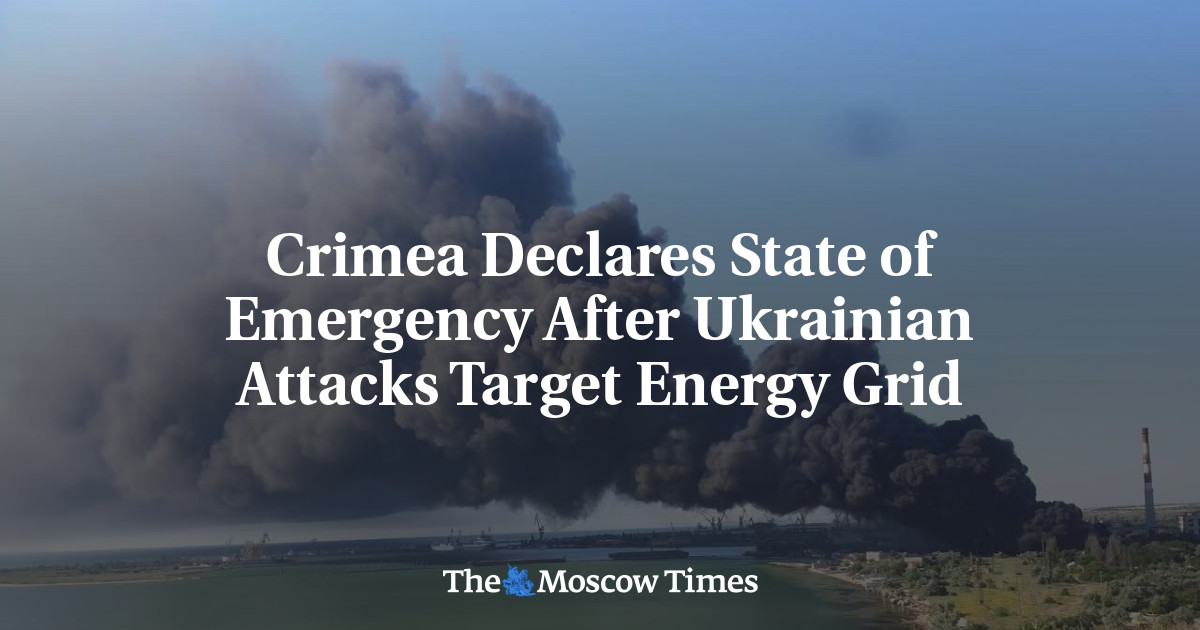
Kremlin-backed authorities in annexed Crimea declared a state of emergency on Friday afternoon after days of intense Ukrainian attacks that have knocked out power in parts of the peninsula and compounded ongoing challenges for residents, including fuel shortages and restrictions on public transit.
Sevastopol Governor Mikhail Razvozhayev announced a citywide state of emergency in a Telegram video address, saying it would remain in effect until the situation improves. Sergei Aksyonov, the Russian-appointed governor of Crimea, posted his own video declaring a regionwide state of emergency, emphasizing the economic rationale behind the move. Aksyonov said the approach would simplify and streamline the process of property damage claims.
The state of emergency allows local business owners to invoke force majeure clauses and enables residents to seek financial compensation for electrical equipment damaged as a result of rolling blackouts. It also lets authorities restrict freedom of movement.
Crimea has faced rolling blackouts over the past week as Ukrainian air attacks have targeted energy infrastructure. Authorities have asked residents to limit their energy consumption while repair crews work to restore normal operations on the regional energy grid. Razvozhayev said Friday that unstable power supplies had caused problems with water pressure in parts of Sevastopol, home to Russia's Black Sea Fleet. He said the water supply would return to normal once the power grid stabilized.
Meanwhile, sea passenger transport in Sevastopol Bay was suspended on Friday morning, though transportation officials did not specify the reasons. Restrictions were also imposed along the Kerch Bridge connecting Crimea with mainland Russia. Officials reported more than 2,000 vehicles waiting to cross amid wait times of around five hours. While officials did not explain the reason for the delays, Ukraine has repeatedly targeted the bridge since the 2022 invasion.
Earlier this week, authorities in Crimea said they would reduce the number of daily trains to and from Russia by half, cutting routes from 14 to 7 over the next two weeks. All remaining lines will now terminate and originate at the Kerch-Yuzhnaya station near the Kerch Bridge, with passenger transport across the rest of the peninsula handled via coordinated bus transfers.
For weeks, Ukraine has stepped up its mid-range drone attacks against military trucks and fuel tankers that supply Crimea from the north, leading to local gasoline shortages. While the peninsula is linked directly to mainland Russia via the Kerch Bridge in the east, Ukrainian attacks in recent years have prompted Moscow to restrict its use for hazardous cargo like fuel. Instead, supply lines have relied on northern land corridors. Ukraine's military said earlier this month that its expanding strike campaign may soon force Russia to risk using the Kerch Bridge for military transportation again.
The compounding problems are having a significant impact on the local economy, which depends heavily on tourism. Kommersant reported Friday that Crimea has seen a sharp drop-off in hotel bookings, with cancellations up around 88% year-on-year.