What Drives Kilauea's Lava Fountains? Scientists Still Aren't Sure
US Geological Survey researchers have described observations of lava fountains at Hawaii's Kilauea volcano in the journal Science. The data made eruptions predictable, but their cause remains unresolved.
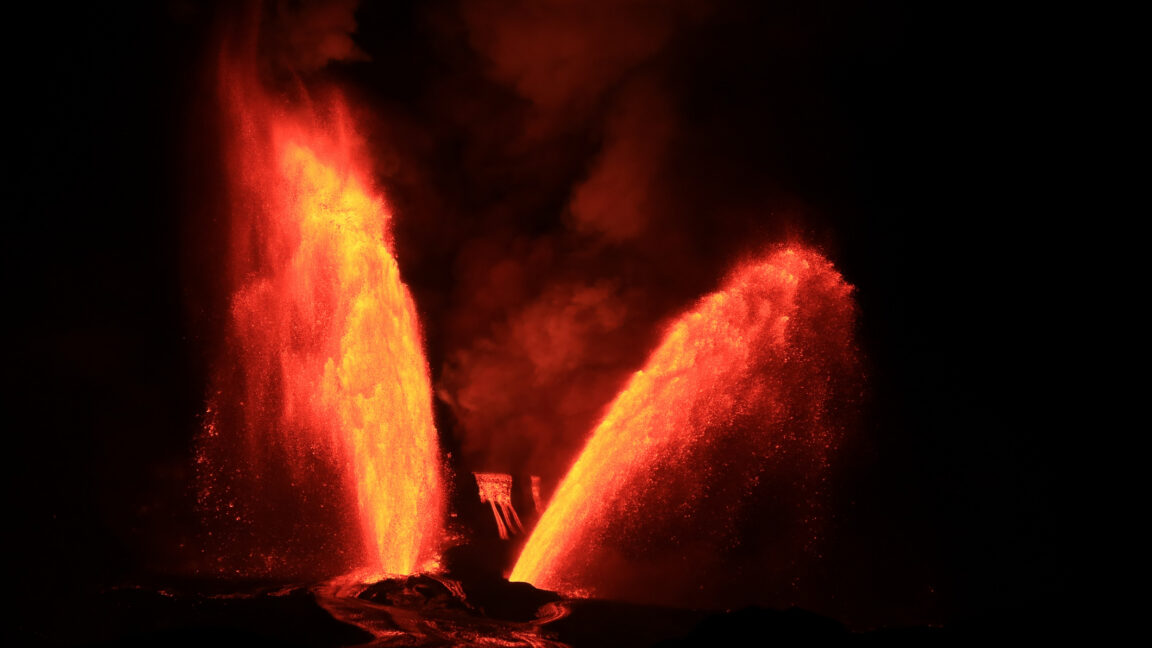
Recent eruptions at Kilauea, a volcano in Hawaii, have produced some of the best-documented observations yet of how lava fountains behave. Researchers from the US Geological Survey (USGS) published their findings in the journal Science. Fountains that can reach several hundred meters in height also occur at Mount Etna and in Iceland, but the mechanism behind them is still not fully understood.
How the eruptions unfolded
Kilauea is the youngest and most active volcano in Hawaii, yet it has had only three fountaining episodes since 1823. After a major eruption in 2018 partly drained one of its underground lava reservoirs, the reservoir began refilling. From 2019 the process sped up, and the summit inflated at more than 22 cm a year. In 2023 the rate rose to 57 cm a year and spread to a nearby caldera.
In 2024, a series of strong earthquakes accompanied the opening of a vent, and a 900-meter-long fissure sent lava up to 160 meters high over 13 hours. A second eruption followed less than a day after the first ended. By last month, 52 more fountain eruptions had taken place, the most violent throwing lava more than 400 meters into the air.
Predictability
The most significant finding was that fountaining eruptions could be forecast. Each eruption caused the summit to deflate rapidly, after which the Halemaʻumaʻu magma reservoir refilled relatively slowly. The USGS noticed that consecutive eruptions occurred when summit tilt reached similar levels. This allowed the agency to issue alerts, which was especially useful because no clear seismic signals appeared right before fountains resumed.
What powers them?
Two leading ideas exist. One holds that pressure in the magma reservoir keeps water mixed in until it reaches a shallow depth and turns to steam, fragmenting the magma and speeding its rise. The other attributes the process to carbon dioxide forming a magma-and-gas foam at the roof of the chamber.
The new data give no clear answer. Carbon dioxide levels stayed low throughout the cycle, which argues against the foam model. Sulfur dioxide rose during eruptions and fell afterward but stayed high overall. The evidence therefore leans toward the steam model, yet it is unclear why a continuous process suddenly triggers fountains.
The researchers acknowledged that more data would help. Gas sampling is typically done at infrared wavelengths, where a great deal is happening during an eruption, and the height of some fountains made it unsafe to install more monitoring equipment.