Qatar's Emir Calls for Talks With Iran as Regional Leaders Push UN for Tougher Stance on Israel
At the UN General Assembly, Qatar's emir called for diplomatic dialogue with Iran, while Turkish and Jordanian leaders criticised the international community's inaction toward Israel. All three stressed the severity of the situation in Gaza and the wider region.
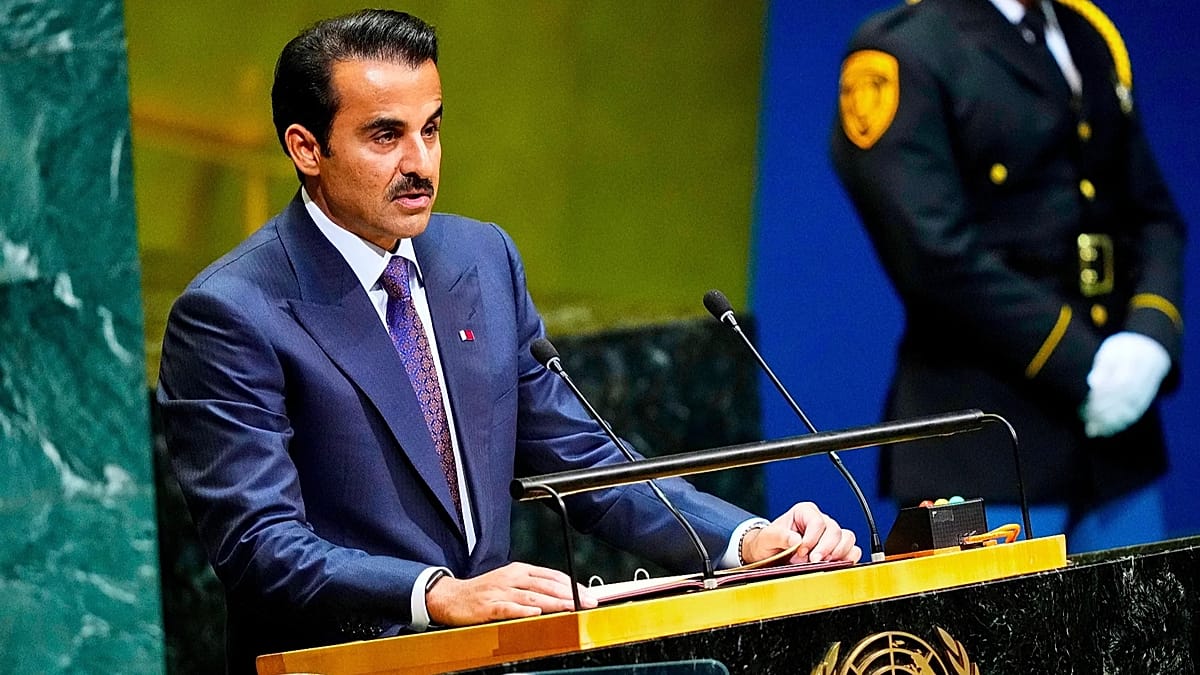
Speaking at the UN General Assembly in New York on Tuesday, Qatar's Emir Sheikh Tamim bin Hamad Al Thani said the Gulf was passing through one of the most dangerous phases in its recent history, attributing the war with Iran to years of postponed diplomatic solutions.
He called for a regional collective security system built on national sovereignty, non-interference and peaceful dispute resolution, arguing such a framework could have prevented the current conflict and that without it, critical infrastructure remains at risk and key waterways could be closed. Any lasting agreement with Tehran, he said, must protect the entire region, including Iran itself. Describing Qatar as a trusted mediator, Sheikh Tamim called for reopening the Strait of Hormuz to shipping, warning that Gulf states were being drawn into a war not of their making.
On Gaza, the emir called the situation genocide in every sense of the word and urged Israel to fully implement the ceasefire by ending military operations, withdrawing troops, lifting the blockade and allowing unconditional humanitarian access. He also criticised Israeli actions in Syria and Lebanon.
Turkey warns against a wider war
Turkish President Recep Tayyip Erdoğan called for freedom of navigation through the Strait of Hormuz and said Turkey was working with other nations to end the Gulf fighting. He described Gaza as the most inhumane concentration camp of the era, urged increased pressure on Israel, and repeated his call for UN Security Council reform. The Israeli delegation walked out during his speech.
Jordan: inaction is a choice
Jordan's King Abdullah contrasted the lack of sanctions or isolation against Israel with measures used in other conflicts, calling the inaction a political choice. He accused Israel of land seizures and settlement expansion in the West Bank, and warned that Israeli actions in southern Syria threatened Jordan's northern border and water security. He added that the Iran war was raising energy and food costs worldwide.

