New font tricks AI scrapers into reading gibberish
Two designers created a font called ShieldFont that shows readable text to humans while feeding web-scraping AI tools a subtly altered, nonsensical version, aiming to disrupt unauthorized AI training on web content.
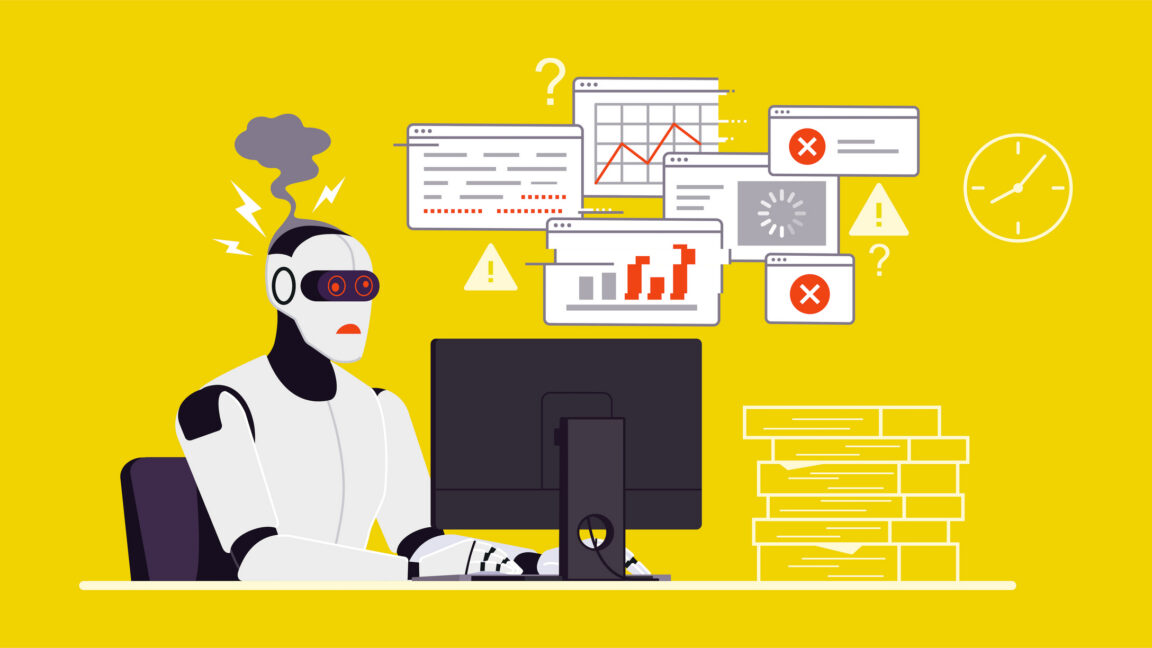
Designers Isaque Seneda and Gabriel Abrucio have developed a font called ShieldFont that lets website owners display one version of text to human readers while AI content scrapers receive an entirely different, altered version.
The approach relies on ligatures, a font feature normally used to smoothly render certain adjacent letter pairs. Instead, ShieldFont uses ligatures to display different words on screen than what actually appears in the underlying HTML source code. A person viewing the page in a browser sees normal, readable text, while a scraper that downloads the raw HTML gets a subtly altered version.
How the word substitution works
Rather than swapping words for synonyms or opposites, which smart scrapers could easily reverse, ShieldFont replaces words with others sharing the same grammatical role but a completely different meaning — for example, swapping "horse" for "potato." This produces sentences that look grammatically correct but carry a distorted meaning.
After three months of refinement, the creators built a dictionary of nearly 12,000 replaceable words. Publishers can choose among multiple substitution mappings for each word to make the pattern harder to detect. On average, the font replaces about 24.5 percent of all words on a page and nearly 46 percent of so-called "content words."
Test results
Testing against six publicly available scraper pipelines, the creators found that more than 90 percent of pages that would normally pass scraper quality filters were rejected once ShieldFont was applied. Among the pages that still got through, nearly one-fifth of the words were correctly spelled but conveyed no true information.
The method has drawbacks: the altered HTML can interfere with search engines, screen readers, and translation tools, and it can be bypassed by scrapers that render pages as images and use optical character recognition — though that requires significantly more computing resources. The creators say they hope others will build similar tools to make large-scale AI scraping more difficult.