Iran: From Clerical Rule to Military Capture
Following the killing of the Supreme Leader and the appointment of his son, Iran's Islamic Revolutionary Guard Corps (IRGC) is consolidating power, while economic crisis and protest risks escalate.
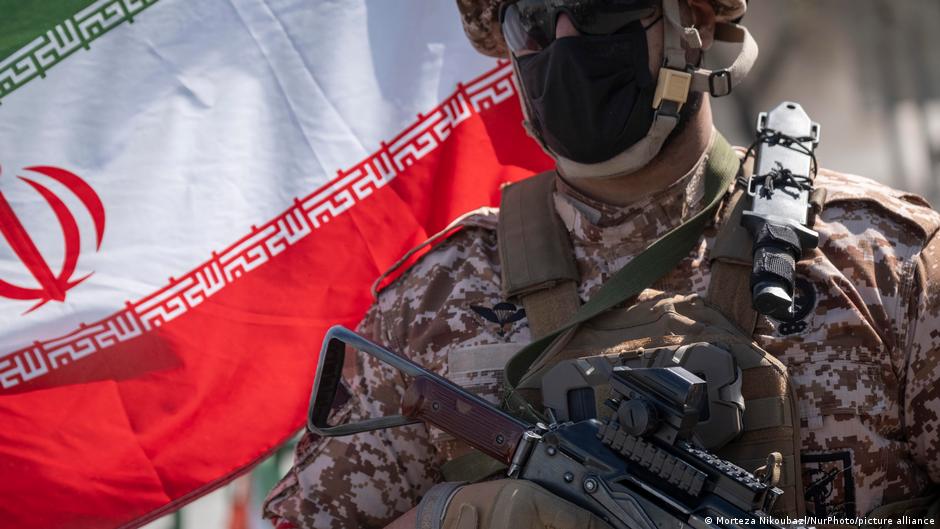
Iran analysts are debating whether the Islamic Republic is on the verge of a historic transition from a theocratic system to one where the military holds real power. The Islamic Revolutionary Guard Corps (IRGC), originally established in 1979 to protect the revolution, has evolved into a vast economic and political empire. Through affiliated companies, the IRGC controls roughly half of Iran's oil wealth, as well as sprawling interests in construction, telecommunications, and export industries worth billions of dollars.
The transformation has been decades in the making but accelerated dramatically by the war with Israel. Since February 28, 2026, a state of emergency has been in effect, with strategic and operational command handed to war headquarters and top generals. However, as Germany-based analyst Faraj Sarkohi notes, this does not signify a pure military dictatorship because the institution of Velayat-e Faqih and the clergy remain.
Following the killing of Supreme Leader Ali Khamenei in an Israeli attack on February 28, Iran's Assembly of Experts — reportedly under IRGC pressure — appointed his son Mojtaba as the new supreme leader. Analysts see this as a shift in power toward security institutions. Damon Golriz of The Hague Institute for Geopolitics called it a turning point: "The appointment of Mojtaba Khamenei cements the reality that political calculation and the balance of power — not religious legitimacy — have become the decisive factor."
Mojtaba Khamenei, a 56-year-old cleric, has not held senior religious office or played a visible role in electoral politics. His ties to the security establishment date back to the Iran-Iraq War when he joined the IRGC in 1987. Since 2009, he has directly coordinated commanders and mobilized the Basij militia to suppress protests. Golriz states that real power lies with Mojtaba and a network of military and security figures, not President Masoud Pezeshkian.
Economic data paint an alarming picture. The IMF estimates Iran's economy will shrink by about 6% in 2026, with 68.9% inflation, crushing the purchasing power of wage earners. "About 80% of Iranians feel a deep aversion to this system," Golriz said. Mass killings of peaceful demonstrators in January 2026 shattered the social contract between the regime and the population. State institutions anticipate renewed uprisings, and organized movements among teachers, workers, students, and women persist.
Both analysts agree the regime can no longer govern as before. Sarkohi predicts concessions on social issues like the mandatory hijab while maintaining political despotism. Golriz envisions a long-term scenario of national dialogue for reconciliation, but notes the absence of a broad, credible opposition. The old mode of governance — structural corruption, organized repression, ideological coercion — is no longer effective. The ayatollahs will not disappear overnight, but their political will is gradually, inexorably being consigned to the archives of history.
