Estonia blames Russia for arson attack on drone maker, allies pledge support
Estonia says Russian security services ordered an August arson attack on drone maker Milrem Robotics, prompting expressions of support from Nato and EU leaders.
Estonia has formally attributed an August arson attack in Tallinn to Russia, saying it was sabotage ordered by Moscow's security services. The fire broke out on 15 August at a building used by Milrem Robotics, a manufacturer of unmanned ground vehicles supplied to Ukraine. Estonian authorities detained two Latvian suspects on 17 August, with a third detained the following day; all three were subsequently handed over to Estonian custody.
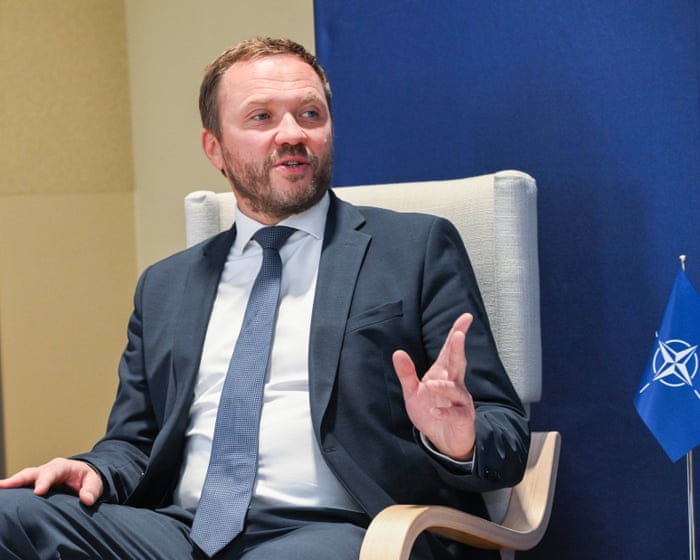
Estonia's foreign minister, Margus Tsahkna, said on Tuesday that the investigation had led to certainty that the attack was ordered by Russian special services as part of a broader campaign across Europe intended to intimidate nations and weaken support for Ukraine. Russia's chargé d'affaires in Tallinn is being summoned to the foreign ministry over the incident.
Estonia's prime minister, Kristen Michal, said the country's response would involve strengthening domestic security, increasing support for Ukraine and raising pressure on Russia, adding that Estonia would not be intimidated.
International reaction
Kremlin spokesperson Dmitry Peskov dismissed the accusations as unfounded. However, Nato secretary general Mark Rutte, speaking in Brussels, said Russia's hostile campaign against Nato allies was failing both on the Ukrainian battlefield and in efforts to undermine alliance unity. Lithuania's prime minister, Mindaugas Sinkevičius, noted similar hybrid attacks in Lithuania, Poland and Germany, while Lithuania's foreign minister, Kęstutis Budrys, said Russia's involvement in the Tallinn attack was evident. Latvia's president, Edgars Rinkēvičs, said continued support for Ukraine would be necessary.
The European Commission, France's president Emmanuel Macron — who called the attack a dangerous escalation — Sweden's acting prime minister Ulf Kristersson, and Britain's ambassador to Estonia all expressed solidarity with Estonia. Roughly 200 incidents of suspected Russian sabotage and hostile activity have been recorded across Europe since the start of Moscow's full-scale invasion of Ukraine, including arson plots, drone incursions, thefts of defence technology and cyber-attacks on infrastructure.