‘Neither war nor peace’: Gazans describe life amid disease and ruins a year into the ceasefire
Three years after the 7 October 2023 attack, Gaza residents live in tents, face disease and malnutrition, and still endure Israeli strikes despite a ceasefire. Donald Trump's plan to end the war has stalled.
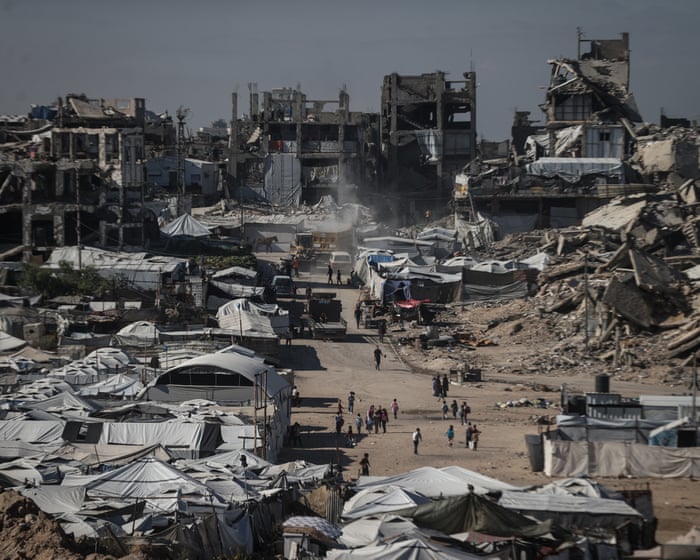
Palestinians in Gaza describe daily routines that nothing in their earlier lives prepared them for. Water and nourishing food are scarce, healthcare is minimal, disease is spreading, unemployment and economic collapse persist, and the risk of death or injury has not gone away.
Memories of lost homes
Ahmed Ishtaiwi, a 43-year-old driver and mechanic, lives in a tent near Deir al-Balah with his two daughters. His home in Beit Lahiya is ruined and out of reach. Among his most valuable possessions are six cheap plastic chairs that remind him of breakfasts in the garden at home. Layan al-Jbour, 15, from Khan Younis shares a crowded shelter in al-Mawasi with her family and took only her schoolbag from home. Tidying the tent reminds her of her old room.
Saleh Kilani, 70, once had a farm and olive trees in Beit Lahiya. He says going to either his home or his farm could cost him his life, and his greatest fear is that the present situation will go on. Esraa Abu Taiba, 26, from Bani Suheila, lost two brothers in the conflict, two were wounded and one is held in detention in Israel. She still occasionally works as a beautician in the tents around her.
A ceasefire in name
A year after the ceasefire, Israeli airstrikes continue. Palestinians approaching the “yellow line” dividing Gaza into Israeli- and Hamas-controlled zones have been shot dead. The overall death toll has risen by a further 1,400 in the past year, to about 73,000. Attacks have intensified recently; health officials and medics reported at least two Palestinians killed on Tuesday and at least two on Wednesday. The Israeli military says it targeted militants.
Ramiz Alakbarov, the UN humanitarian coordinator for the Occupied Palestinian Territory, told the Security Council that despite more supplies, the health situation remains critical, with infectious diseases widespread in overcrowded sites. Israeli authorities deny shortages and say more than 600 trucks enter Gaza daily.
Hamas has reimposed its authority over the 2.3 million people in the part of Gaza not held by Israel, running a rudimentary administration. Trump's plan to end the war has stalled, with little progress on disarming Hamas, Israeli withdrawal or reconstruction.


