Photo of electrical cabinet next to Latvia's border fence sparks debate over infrastructure security
A photo shared on social media showing a technology cabinet placed very close to the Latvia–Belarus border fence has prompted users to question its security. The State Border Guard has already reported cases of sabotage against the border's technological infrastructure.
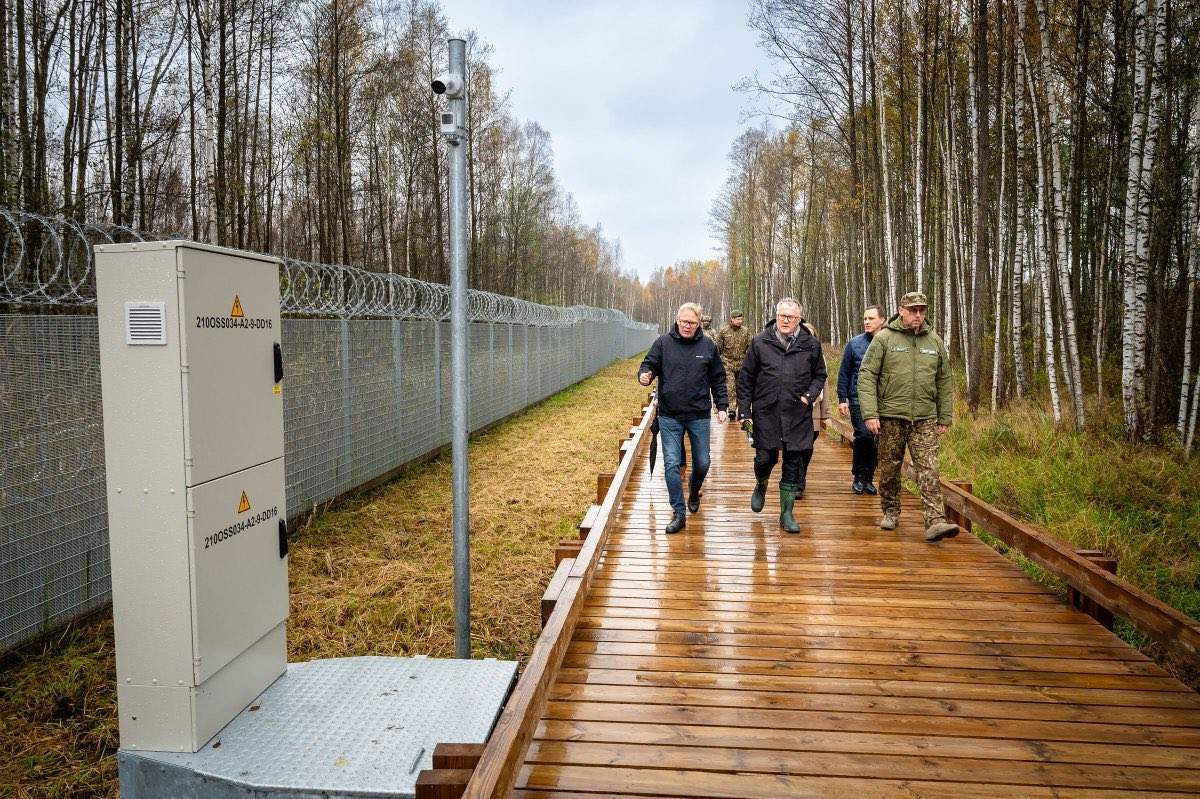
A photograph that spread on social media this week shows an electrical, or technology, cabinet installed very close to the border fence and a wooden walkway on a section of Latvia's eastern border. The author of the post sarcastically asked who had approved such a solution, and the image set off a broad discussion about how securely the border's technological infrastructure is placed.
Commenters were divided. Some argued that such cabinets should be buried or placed somewhere harder to reach. One user noted, however, that the ground in the area may be waterlogged or marshy, which would complicate that. Another pointed out that, from an engineering standpoint, locating a cabinet next to a communications and power route may be logical, and that the key question is physical protection against unauthorised access and sabotage.
Sabotage has already been recorded
At the end of September, the State Border Guard publicly reported that during construction of the border's technological infrastructure, deliberately cut cables, sabotaged distribution cabinets and damaged video surveillance equipment had already been recorded. In early October, following an incident at the Latvia–Belarus border, it was reported that masked individuals entered Latvian territory, damaged an electrical distribution cabinet and stole two surveillance cameras. State Border Guard chief Guntis Pujāts said the number of sabotage cases is rising.
The cabinet is part of a single system
Distribution cabinets are part of the automated border surveillance system, alongside video surveillance poles, a data transmission network, power supply and sensors. LVRTC, the Latvian state radio and television centre, explains that cameras need continuous power, data transmission and processing equipment. By the end of the second quarter of 2026, 86% of the planned elements in the first phase had been installed. The total cost of the project is nearly 96 million euros, most of it funded by the European Union.
One photograph cannot show that the solution is a design error, since the location is affected by cable routes, power connections, soil, flood risk and maintenance access. In security terms, a combination of several protection layers could be suitable: lockable enclosures, controlled access, sensors, remote monitoring and system redundancy.
Estonian and Lithuanian authorities do not publicly disclose the exact locations of cabinets and other critical nodes. Lithuania has built more than 500 kilometres of physical barrier on its border with Belarus.