EU and Ukraine officially launch accession talks after Hungary lifts veto
The European Union and Ukraine on Monday formally opened the first stage of accession negotiations, a historic step toward Kyiv's membership in the bloc. The talks were unblocked after Hungary's new Prime Minister Peter Magyar agreed to lift the previous veto.
Historic step toward Ukraine's EU membership
The European Union and Ukraine on Monday formally opened the first stage of accession negotiations, a significant milestone on Kyiv's path to joining the 27-nation bloc. Russia's full-scale invasion of Ukraine in 2022 gave a major boost to an idea that was once contentious among the country's electorate.
Removal of Hungary's obstacles
The process had been stalled for two years because starting talks requires unanimous approval from all EU member states. Hungary's former Prime Minister Viktor Orban had been blocking the move. However, technical-level discussions had already taken place despite the political impasse. Hungary's new Prime Minister Peter Magyar recently announced that he had reached an agreement with Ukraine on measures to strengthen the rights of the ethnic Hungarian minority in Ukraine. Magyar had made such an agreement a condition for lifting Budapest's veto on Ukraine's EU accession talks.
Reactions from European and Ukrainian leaders
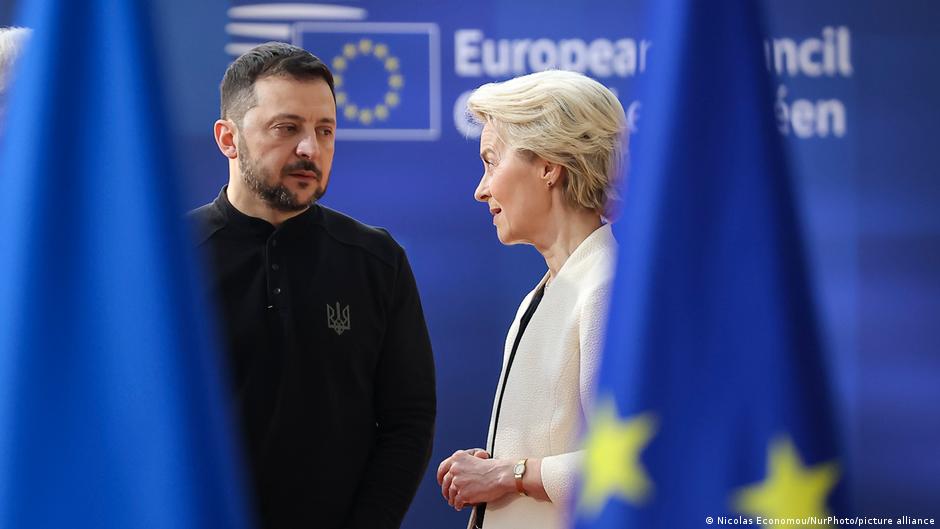
European Council President Antonio Costa, speaking at the G7 summit in Evian, France, wrote online: "Today, we are taking a historic step towards Ukraine's future within the EU, by opening formal negotiations for its accession." European Commission President Ursula von der Leyen called the opening of the first negotiating cluster a "huge step forward," praising Ukraine's progress on reforms, particularly in fighting corruption and strengthening the rule of law.
Ukrainian President Volodymyr Zelenskyy said the development "sends a clear message that Europe's progress cannot be stopped." He expressed happiness about delivering this message from Chisinau, Moldova, which took the same step on Monday, before heading to the G7 summit in France as a guest.
The accession process and timeline
Prospective EU members must demonstrate compliance with the bloc's standards across multiple areas, divided into six clusters comprising 33 chapters, with two additional chapters negotiated separately. The first cluster to open and the last to close is "fundamentals," covering judiciary, fundamental rights, economic criteria, and democratic institutions. All EU members must agree that requirements are met, then the European Commission, member states, and the European Parliament must approve closing the negotiations, paving the way for signing and ratifying an accession treaty.
The accession process typically takes years or even decades. The last country to join the EU was Croatia in 2013. Turkey, which applied in 1987, only began talks in 2005, and negotiations remain stalled. Ukraine's talks are also likely to take years, and full membership would most likely not be possible while the country is still at war with Russia.
Partial membership proposals
Several European leaders are calling for a "two-tier membership" system to accelerate the integration of Ukraine, Moldova, and other aspirants. German Chancellor Friedrich Merz proposed a special "associate member" status that would allow Ukraine to participate in EU summits and ministerial meetings without voting rights. This idea met resistance in Ukraine over concerns it could sideline the country.
Serbian Prime Minister Aleksandar Vucic and Albanian Prime Minister Edi Rama proposed a different model of partial membership, which would include countries in the European Single Market and grant freedom of movement but stop short of full political membership and veto powers. This more concrete economic-incentive proposal, however, was met with silence and hesitation from Brussels and proponents of two-tier membership like Germany and France.