EU and China clash over import quotas as Brussels seeks trade rebalance
Brussels and Beijing are locked in tense talks over quotas on Chinese imports to the EU, with China resisting the proposal ahead of an October deadline set by the European Commission.
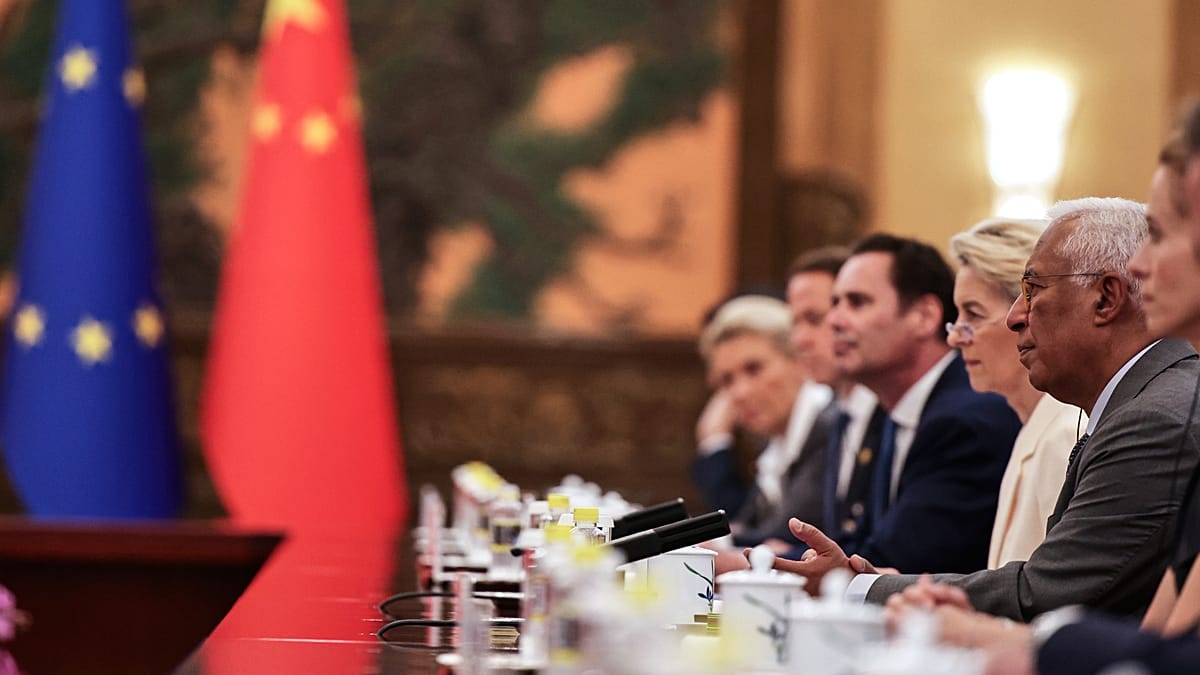
The European Union and China are engaged in intense but difficult negotiations over access to each other's markets, according to information obtained by Euronews. Talks began in June, and the European Commission has set an October deadline to reach "tangible" results. China, however, is pushing back hard against EU efforts to shield its market from Chinese competition.
According to a person familiar with the matter, the Commission, negotiating on behalf of the 27 EU member states, wants China to accept quotas on specific product categories. It remains unclear, though, how — or whether — China would agree to respect such limits.
EV restrictions rejected
Media reports indicate the Commission has pushed for so-called "voluntary export restrictions" in the electric vehicle sector, a mechanism under which China would agree to limit its own exports to the EU under a negotiated deal, allowing Brussels to avoid formal defensive trade measures that Beijing might view as hostile. China's trade minister rejected this approach earlier this month.
Negotiations have now entered their final stretch as the October deadline approaches. Ditte Juul Jørgensen, Director General of the Commission's trade department, travelled to China last week for two days of intense discussions, while EU Trade Commissioner Maroš Šefčovič is set to visit Beijing on 8 and 9 October for political talks, ahead of a key summit of EU leaders in Brussels.
To give the negotiations room to succeed, the Commission has postponed adopting trade defence measures meant to protect the EU's chemical industry, one of the sectors most exposed to Chinese competition. But other industries face similar pressure. EU Industry and Trade Commissioner Stéphane Séjourné told Euronews last week that rebalancing the trade relationship has become "existential" for Europe. The Commission says the EU lost 250,000 industrial jobs last year, concentrated particularly in energy-intensive sectors and automotive supply chains.