EU unveils updated Arctic strategy: security, cables and icebreakers
European Commission President Ursula von der Leyen presented an updated European Union Arctic strategy on Tuesday, 20 October. It foresees investment in security and infrastructure, undersea cables, satellite links and a larger icebreaker fleet.
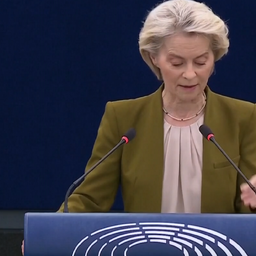
The European Union presented an updated Arctic strategy on Tuesday, 20 October, replacing a document adopted in 2021. European Commission President Ursula von der Leyen, who leads the EU's executive body, said the bloc intends to invest in the region's security and in solid infrastructure, as well as expand its economic options. Deutsche Welle reported the details. The strategy gives particular weight to access to raw materials, more icebreakers and the laying of deep-sea cables.
Cables and communications
The strategy provides for a deep-sea cable linking Greenland with mainland Europe. It would form part of a larger network connecting Europe with Canada, Japan and South Korea. To protect cables in the North Atlantic and the Arctic and help repair them, a dedicated monitoring centre is planned. In time, it is also meant to track vessels of Russia's so-called "shadow fleet" and to find ships engaged in illegal fishing or involved in polluting the seas.
Brussels is also working on a satellite communications system in the Arctic under the EU's IRIS² programme. By 2030, the EU intends to place 260 satellites in low and medium Earth orbit to give member state governments secure long-distance communications. The strategy says the EU aims to buy additional satellites to cover the Arctic and is already supporting expanded satellite coverage in Greenland.
Icebreakers
The EU wants to create opportunities for member states to buy and use icebreakers jointly. According to an unnamed European official cited by AFP, all EU countries together have about 10 icebreakers, compared with 40 for Russia.
Why now
EU Commissioner for International Partnerships Jozef Sikela said the strategy addresses the region's most pressing challenges, from accelerating climate change to growing geopolitical and security tensions. He said Russia's aggressive war against Ukraine had completely changed the situation and that cooperation among Arctic countries is very difficult. Von der Leyen described the Arctic as a place where the tectonic plates of geopolitics collide, and said it is part of the European Union.