ECB raises eurozone interest rates as Iran war stokes inflation
The European Central Bank has raised interest rates for the first time since 2023 in response to higher inflation caused by the war in Iran.
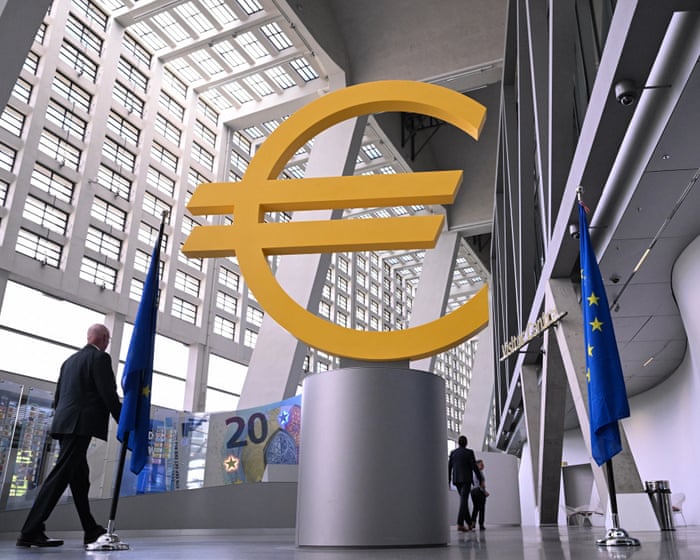
The European Central Bank (ECB) has raised interest rates for the first time since 2023, attempting to tame inflation fueled by the war in Iran. The ECB increased its main deposit rate from 2% to 2.25%. Financial markets expect two more increases by next spring.
Eurozone consumer price inflation rose to 3.2% in May 2026, from 3% in April, sparking concerns that the conflict in the Middle East will push manufacturers and retailers to raise prices through summer and autumn to maintain profit margins. The ECB’s inflation target is 2%.
ECB President Christine Lagarde said the outlook for inflation and the broader economy is uncertain while the war in Iran continues to push energy costs higher. “The full implication of the war for medium-term inflation and growth will depend on the intensity and duration of the energy price shock,” she said.
The rate increase is seen as an attempt by the ECB to get a grip on inflation early, following criticism that it delayed rate rises in 2022 after Russia’s invasion of Ukraine. The ECB also raised its main refinancing rate to 2.4% from 2.15%.
ECB officials downgraded their growth forecast for the eurozone to 0.8% in 2026 and 1.2% in 2027, from previous forecasts of 0.9% and 1.3%. Lagarde added that risks to growth are to the downside, mainly due to the war in the Middle East.
The central bank had held rates steady until now hoping the US and Iran would sign a peace deal. However, a deal has proved elusive, and oil prices remain above $90 a barrel, compared with about $70 before the war started.
Mark Wall, chief European economist at Deutsche Bank, said this is a significant moment – the first ECB hike since 2023 and the first by a major global central bank in response to the energy shock. He warned that financial markets were wrong to expect two more rate rises by March, given a weakening economy with rising unemployment and slowing growth.
The Bank of England is expected to hold rates at 3.75% when it meets next week, while the US Federal Reserve is also expected to hold rates despite having the highest inflation in the G7 at 4.2%.