South Korea to Invest $1 Trillion in Memory Chip Production and Humanoid Robots
South Korea's government and top tech companies commit $1 trillion to megaprojects aimed at boosting memory chip output, building AI data centers, and commercializing humanoid robots by 2028.
South Korea has announced a massive $1 trillion investment plan involving the government and major technology companies. President Lee Jae Myung emphasized that semiconductors, physical AI, and AI data centers are the three pillars for the nation's leap forward. The announcement comes amid record profits for chipmakers like Samsung and SK Hynix due to AI demand, but also supply shortages and higher consumer electronics prices.
The largest project is a $585 billion commitment by Samsung and SK Hynix to build new chip fabrication plants in southwestern provinces and the Seoul capital region. The goal is to double DRAM production within five years. However, SK Hynix Chairman noted that a previous fab cluster took nine years to complete, raising questions about how soon consumers will see lower memory prices.
A second megaproject involves $357 billion from SK Group, GS Group, and Naver for large-scale AI data centers in outlying provinces such as South Chungcheong and Gangwon. These facilities require substantial power and water: the Ministry of Climate and Environment is working to secure 6.3 GW of electricity and 650,000 tons of water for the chip plants, plus an additional 8 GW for data centers, using renewable and nuclear energy.
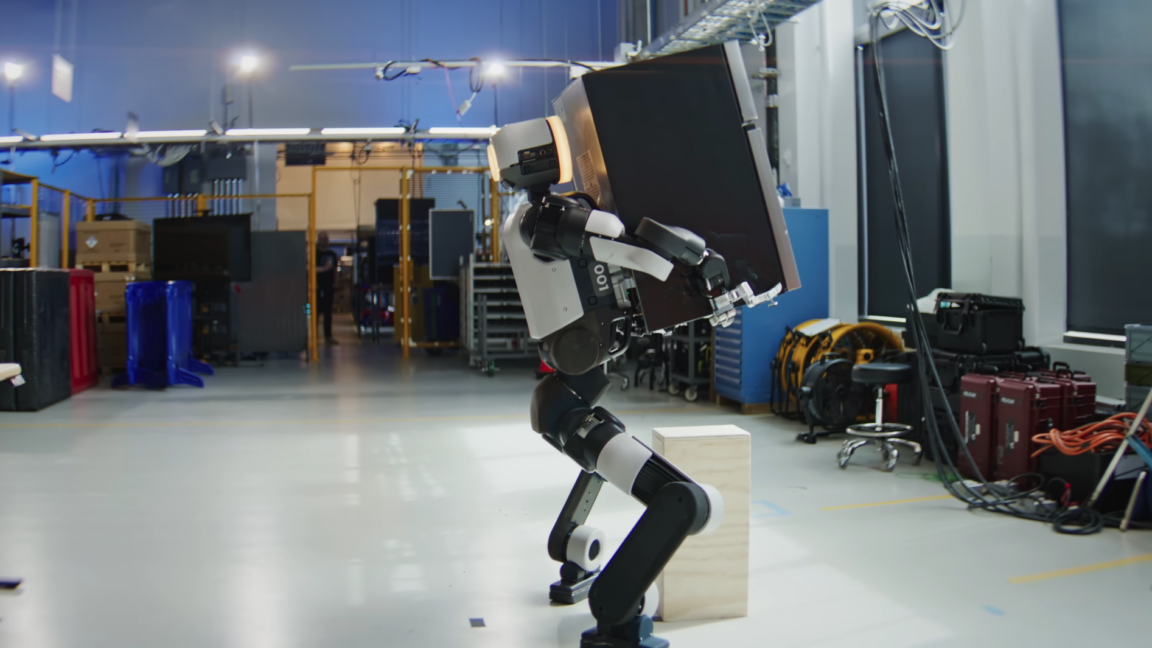
The third focus is on physical AI, with plans to develop a Korean general-purpose foundation model for robots within three years. Hyundai Motor has committed $5.8 billion to build a robot manufacturing facility in Saemangeum, aiming to produce 30,000 Atlas humanoid robots annually by 2028 through its subsidiary Boston Dynamics. The government targets commercializing humanoid robots in 10 major industries and training 10,000 AI robotics specialists over five years.
These initiatives face pushback: Hyundai's labor union voted overwhelmingly to authorize a potential strike over job protections and profit-sharing amid robot deployment. Additionally, there is public debate about chipmakers' huge profits, with some officials suggesting wealth distribution. A policy chief even proposed a national dividend from AI-driven tax revenue, though the government later clarified it was a personal view.