Latvia's election authority: first results of Saeima vote expected around 2-3 a.m.
On election night, Central Election Commission chairman Māris Zviedris said the first preliminary results for party lists would come overnight, while the commission also had to handle an incident where a prisoner voted with an invalid ID.
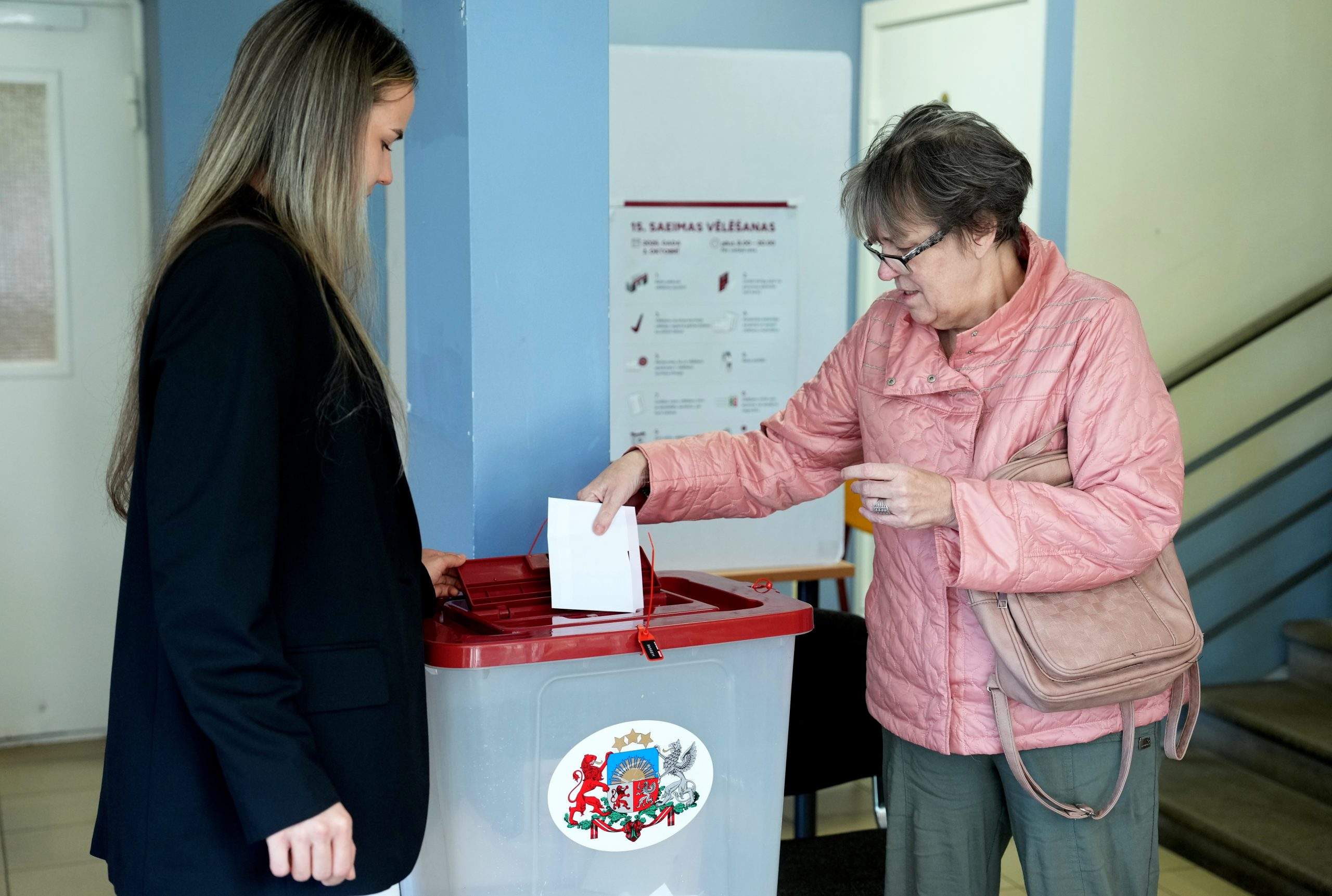
As Latvia held its 15th Saeima elections on Saturday, October 3, Central Election Commission (CVK) chairman Māris Zviedris visited a polling station at Riga's Bolderāja New Primary School in the evening and outlined how the night's process would unfold.
Zviedris noted that voter turnout during the day could have been higher, though it appears broadly similar to previous elections. He suggested that questions about lower-than-expected turnout should be directed to political parties and voter groups themselves rather than the commission.
What happens after polls close
Once polling stations close at 8 p.m., local commissions must complete a series of required preparatory steps before vote counting can begin, a process expected to take roughly an hour. A key task is cross-checking voter lists against the electronic register to confirm no one voted more than once; if a duplicate is found, the commission must sort out the relevant records and documents.
Only once there is full nationwide certainty that no repeat voting occurred will the first ballot box be opened, expected around 10 p.m. The first preliminary results for party lists are expected overnight, around 2 or 3 a.m., while data on individual candidates will follow on Sunday morning.
Prison voting incident
Zviedris also addressed an incident at Riga Central Prison, where an inmate cast a ballot using an identity document that had expired. Voting in detention facilities is organized by prison staff but follows the same rules as regular polling stations. It emerged that one inmate's ID, held by the prison administration, had been expired for several months. Since voting without a valid document is not permitted, the CVK convened an emergency session and decided to hold a repeat vote at the facility to ensure only valid ballots were counted — something feasible because the prison is a closed, controlled environment where all voters can be identified and reached.
Asked whether a voter could slip two envelopes into a ballot box, Zviedris said the staff member stationed at the box monitors specifically for this, and while theoretically possible, it would be difficult to pull off in practice. He added that voting systems and technology had functioned smoothly so far this year, though a substantial amount of work remained for election officials overnight.

/nginx/o/2026/09/22/17931670t1h9df1.jpg)
