How powerful a power bank do you actually need for your laptop
Charging a laptop effectively depends more on watt-hours and wattage output than on a power bank's advertised mAh rating, experts note. Conversion losses and USB-C PD compatibility also determine whether a bank can keep up with a laptop's power drain.
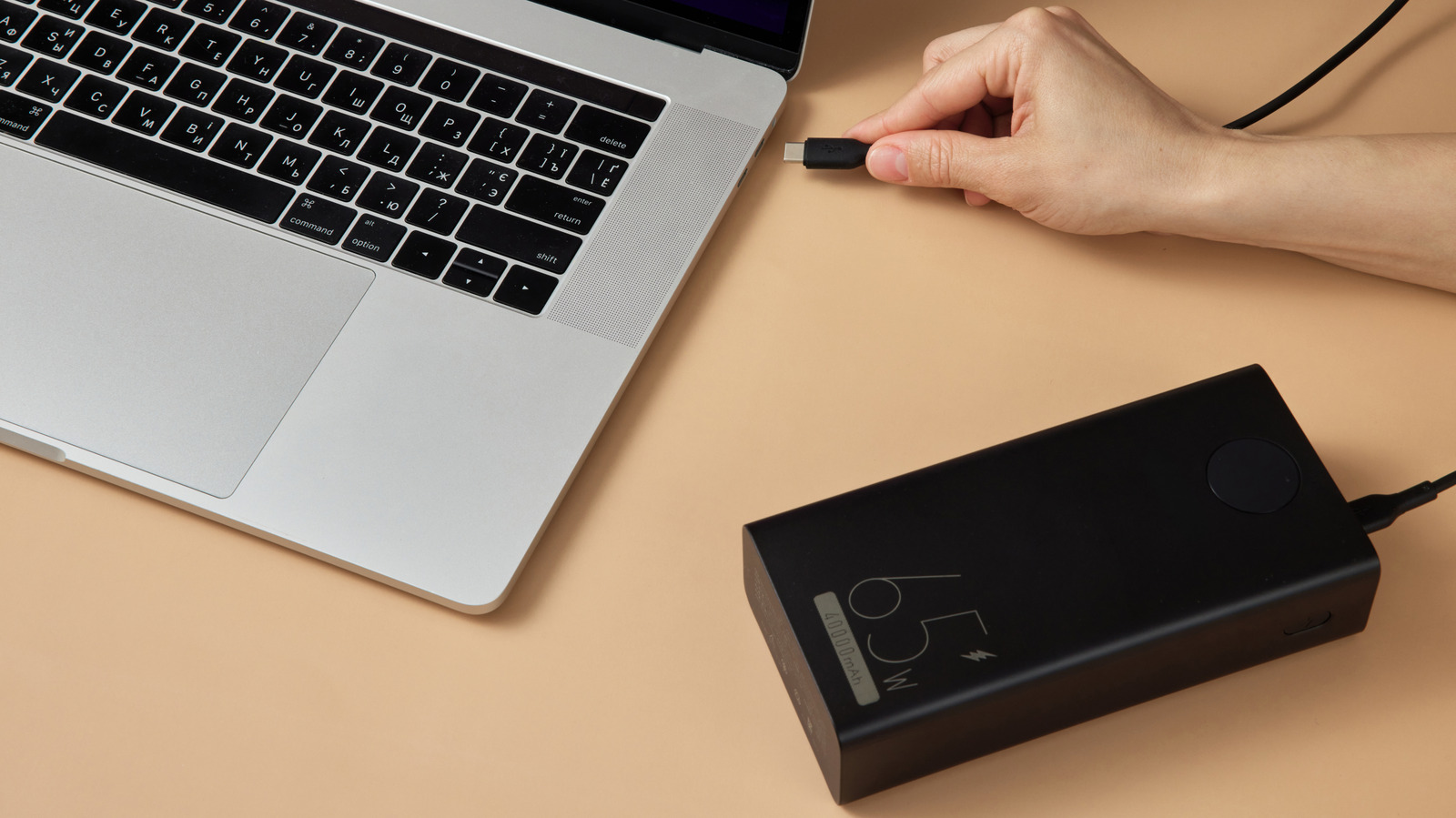
When shopping for a power bank to charge a laptop, the large milliamp-hour (mAh) figure printed on the box can be misleading. A more accurate way to judge capacity is watt-hours (Wh), calculated by multiplying the mAh rating by the battery's voltage (typically around 3.7V for lithium-ion cells) and dividing by 1,000. Using this formula, a 10,000 mAh bank stores roughly 37Wh, while a 20,000 mAh bank stores about 74Wh.
Laptop battery capacity matters too
To pick a suitable power bank, it also helps to know your laptop's own battery capacity in Wh, usually listed on the manufacturer's website — modern laptop batteries range from around 37Wh to as much as 100Wh. Average power draw can be roughly estimated by dividing the battery's Wh rating by how long it lasts on a charge, though actual consumption varies significantly depending on the task being performed.
Charging isn't perfectly efficient
When estimating how much extra runtime a power bank provides, it's important to factor in conversion losses. Standard charging typically loses about 20 percent of energy, while fast charging via USB Power Delivery can lose 30 percent or more. Capacity alone also doesn't indicate charging speed, which depends on the bank's wattage output. If a laptop demands more power than the bank can supply, the shortfall is drawn from the laptop's own battery.
What to look for
Buyers should look for banks labeled "USB-C PD," which allow negotiation of higher charging levels than a standard USB port, and should check the per-port wattage rating specifically, since a bank's total advertised output may not be available on a single port. A 20,000 mAh (about 74Wh) bank is generally adequate for occasional or partial top-ups, while a 27,000 mAh (about 100Wh) unit is considered closer to the ideal choice for most users. If charging fails, it's also worth checking whether the USB-C cable itself supports high-wattage power delivery, since not all cables are rated for it.