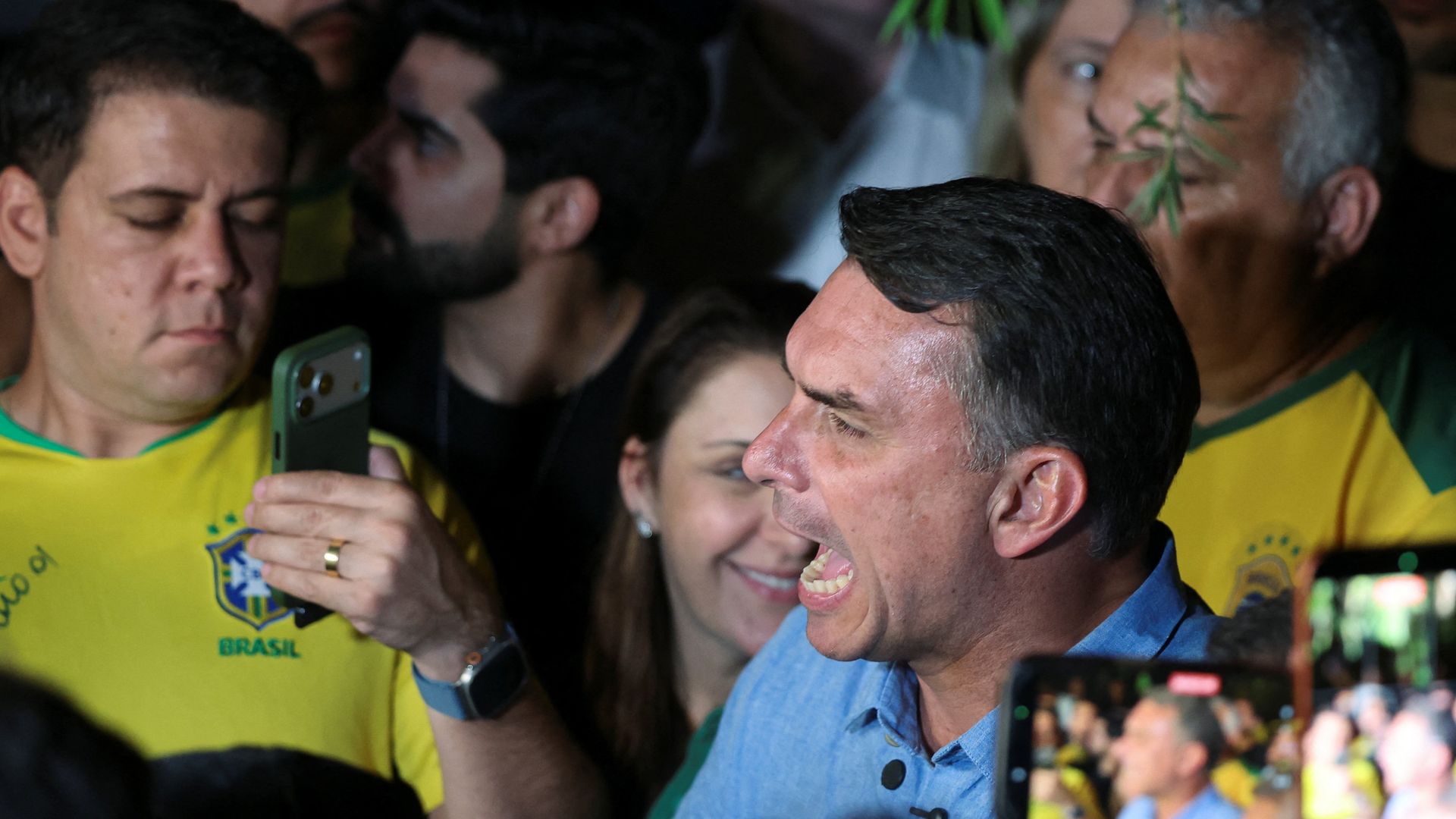
Brazil heads to the polls as Lula and Bolsonaro's son battle for presidency
Brazilians voted Sunday in a presidential election between incumbent Lula da Silva and Senator Flávio Bolsonaro, with a runoff expected on October 25 if no candidate wins an outright majority.
Brazilians cast ballots Sunday in a pivotal presidential election pitting incumbent Luiz Inácio Lula da Silva against Senator Flávio Bolsonaro, as much of Latin America shifts politically rightward in line with the Trump administration's influence.
Bolsonaro, 45, is the son of former President Jair Bolsonaro, who is currently serving a 27-year sentence for attempting a coup. Lula, 80, is contesting his seventh presidential race and has deepened Brazil's ties with China during his current term.
If none of the 12 presidential candidates secures more than 50% of the vote, the top two finishers will face each other in a runoff on October 25. Sunday's vote also determined 27 state governors, state legislature members, all 513 seats in the lower house of Congress, and 54 of the 81 Senate seats, among nearly 159 million eligible voters.
US pressure and domestic struggles
Lula expressed confidence in a first-round victory before voting, though he faces a difficult race amid an affordability crisis and a corruption scandal involving the judge who led the investigation against Jair Bolsonaro. Lula has repeatedly warned against US interference in the election, after the Trump administration imposed steep tariffs on Brazilian exports, revoked the Brazilian ambassador's visa, and sanctioned the judge in question.
Flávio Bolsonaro has highlighted his closeness to the White House, though he denies his campaign received US government assistance. He has pledged to crack down on criminal organizations and pursue better trade terms with Washington, including in rare minerals. His platform also includes releasing his father and returning him to politics. Bolsonaro's own campaign has been shadowed by several corruption allegations.
How voting unfolded
Polls closed at 5 p.m. local time, with vote counts beginning shortly after. The Organisation of American States' observation mission reported that voting proceeded smoothly and securely, and Brazil's top electoral court chief said there was no concrete indication of international interference. No significant fraud has been detected since Brazil introduced electronic voting in the 1990s.