Record number of young people in England fear long-term unemployment, study finds
A new report reveals that young people in England are increasingly pessimistic about their futures, with a record number fearing long-term unemployment.
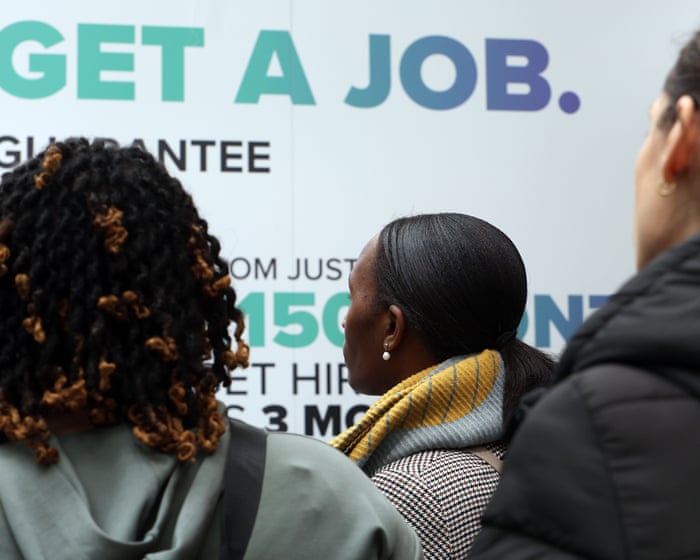
Young people in England are increasingly losing faith in their futures, according to a report by the Institute for Public Policy Research (IPPR). Analyzing survey data, including from the Office for National Statistics, the IPPR found that 16- to 21-year-olds are less confident about being successful than a decade ago.
Younger people are also less convinced than older generations that hard work will be rewarded. Only one in four 16- to 29-year-olds agreed with the statement that "everyone has a fair chance to go as far as their talent and hard work will take them." This compares with 35% of 50- to 69-year-olds and more than 40% of those over 70.
Policymakers have become increasingly concerned about the challenges facing young people, with the number of 16- to 24-year-olds not in education, employment, or training (Neets) recently exceeding 1 million for the first time in a decade. Former Labour minister Alan Milburn is reviewing how to reverse this rise for the government, with findings due later this year.
The IPPR argues that falling confidence in future opportunities is not just socially problematic but can harm the economy by discouraging young people from studying, working hard, and building savings.
When 16- to 21-year-olds were asked to rate their chances of future success, the proportion who chose 20% or less was just 2% in 2015–17 but tripled to 6% by 2023–25. The share who believed they had an 80%-plus chance of suffering long-term unemployment in their lifetime more than tripled to 7% over the same period.
The IPPR identifies several possible causes: the effects of austerity, the rise of personalized algorithms online, and deteriorating youth mental health. The thinktank estimates that as many as four in 10 women and three in 10 men aged 16–24 have poor mental health. Among those affected, only 24% believe they have a good chance of succeeding in life, compared with 48% of their peers.
A government spokesperson said a £2.5 billion youth employment support package is being introduced to help nearly 1 million young people, and youth hubs are being expanded across Great Britain.