August storm exposes gaps in Latvia's water utilities – generators and clear rules lacking
The August storm caused power and communication outages that disrupted many Latvian water utilities, revealing the sector's lack of emergency preparedness. Experts say around two billion euros in investment will be needed over the next 10–15 years.
The August storm tested how well Latvia's water utility companies could cope with a crisis. Some only needed to draw lessons afterward, while others faced serious problems as power and mobile network outages disrupted their ability to keep services running.
Sandis Dejus, executive director of the Latvian Water and Wastewater Utilities Association, says the country still lacks clear requirements on how long and to what extent utilities must be able to independently maintain water supply and wastewater removal during a crisis. Discussions on this are currently underway between ministries and responsible institutions.
Generators and staff in short supply
Dejus estimates the sector is short by about 1,300 generators needed to keep operations running during power cuts. How well a company was prepared often depended on how persistently its management had convinced local governments and regulators to invest in backup equipment. In some areas residents barely noticed the outages' impact, while in others drinking water had to be delivered by tanker trucks for several days. An added challenge was keeping wastewater treatment plants running, since they require high-capacity generators and sufficient fuel reserves.
Major investment needed
According to Dejus, roughly two billion euros will need to be invested in the sector over the next 10–15 years to meet European and national requirements on wastewater, drinking water, cybersecurity and resilience. The sector's total annual turnover is around 160 million euros. The Ministry of Climate and Energy, together with the Organisation for Economic Co-operation and Development and the European Commission, is currently studying how to finance the sector's development.
A local example – Limbaži
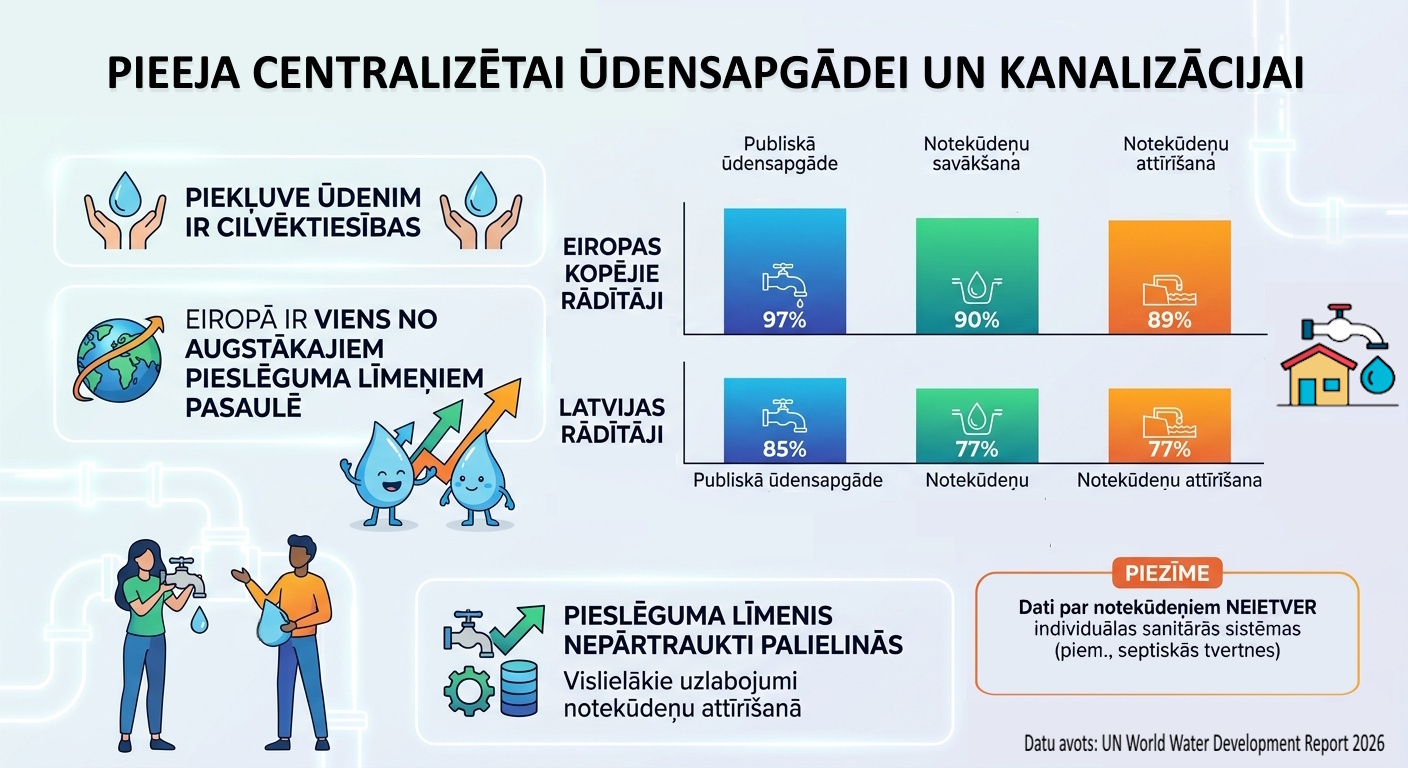
In Limbaži municipality, centralized sewage and, in places, water supply networks still need to be built in former garden-plot areas, including in Skulte parish, where such a project could cost around 1.4 million euros. This spring, the company Limbažu siltums invested 30,000 euros to build new connections in Kaupiņciems, but it can only cover part of the cost of new hookups.