US students develop electric car that produces more energy than it consumes
Students from Clemson University, working with BMW, have built the Deep Orange 17 electric car prototype, whose solar cells can generate more energy on daily commutes than the vehicle uses. It is planned to be shown at CES 2027 in Las Vegas.
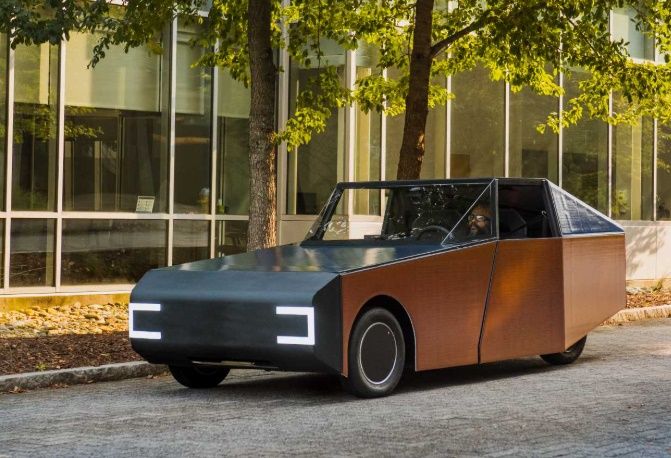
A team of 16 students from Clemson University in the US has developed an electric vehicle prototype called Deep Orange 17. The project was created in cooperation with BMW, with the Fraunhofer Institute for Solar Energy Systems contributing to the solar technology component.
Over 1,700 solar cells
The two-seater car's body incorporates more than 1,700 solar cells capable of generating electricity both while driving and while parked. Unlike setups where solar power is merely a supplementary feature, here it forms one of the core components of the car's energy system. The system can also operate in shade, continuously topping up the battery.
Energy balance on daily trips
According to the students' calculations, on a daily trip of about 20 kilometers in various cities — including Frankfurt, Madrid and Mumbai — the car could generate enough energy to provide roughly an additional 50 kilometers of range.
Light weight and aerodynamics
To achieve this level of efficiency, developers focused closely on the car's weight and aerodynamic shape. The prototype weighs only about 550 kilograms, and its body was designed drawing inspiration from the aerodynamic properties of the boxfish.
Deep Orange 17 is intended to continue serving as a research platform for developing sustainable mobility solutions. The car is also expected to be displayed at the CES 2027 exhibition in Las Vegas.