Doctor questions White House claims about Trump's good health
Cardiologist Jonathan Reiner has publicly raised concerns about several signs that, in his view, cast doubt on White House assurances regarding President Donald Trump's health. He is calling for greater transparency around the president's medical information.
Jonathan Reiner, a medicine professor at George Washington University who spent nearly three decades as former Vice President Dick Cheney's cardiologist, has written a column in The New York Times questioning the White House's statements about President Donald Trump's health.
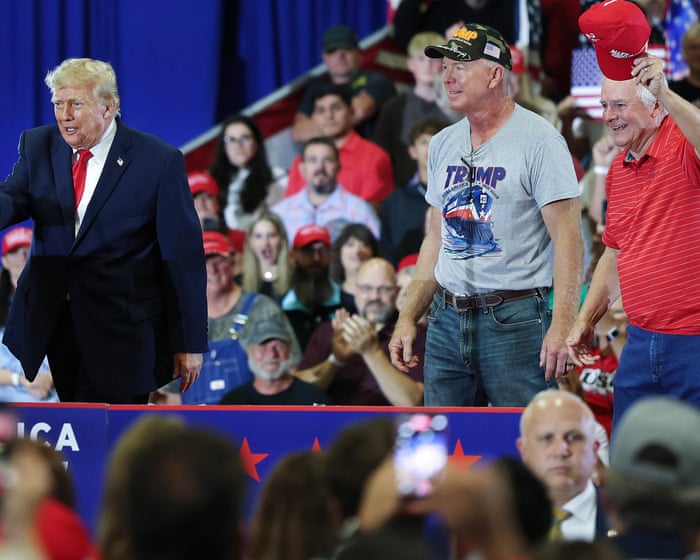
After a medical exam in May, the president's personal physician, Sean Barbabella, declared Trump to be in "excellent health." Reiner, however, points to several publicly visible signs over the past year that he says raise questions — large bruises on Trump's arms, swelling in his legs, and apparent difficulty staying awake at public events.
Unanswered questions
The White House has attributed the bruising on Trump's arms to frequent handshakes and regular aspirin use, but Reiner views this explanation skeptically and also questions the dosage of aspirin involved. He also notes that 22 consultants took part in the president's most recent medical exam, and says it would be important to understand why such a broad team was needed.
Regarding the leg swelling, which led to an unscheduled medical exam last summer, doctors attributed it to chronic venous insufficiency. Reiner points out an apparent inconsistency — a routine exam conducted months earlier reportedly found no such swelling. He also highlights Trump's recently observed drowsiness at public events, noting that daytime sleepiness can have various causes, some of which can be serious if left untreated.
Reiner also references extensive cardiac and abdominal examinations conducted last October at Walter Reed National Military Medical Center, as well as the repeated use of the Montreal Cognitive Assessment (MoCA), which he describes as an initial screening test rather than a comprehensive neurocognitive evaluation.
Call for greater transparency
Reiner argues that in a representative democracy, the public must be confident in their leader's health and ability to govern. He points to the 25th Amendment to the US Constitution and a bill proposed by Congressman Jamie Raskin that would establish an independent commission to assess presidential health. At the same time, he acknowledges that some medical information should remain confidential, including for reasons of national security.
Other, unconfirmed claims about Trump's health have previously circulated publicly, including statements from a physical therapist.