Trump's midterm sprint: are his signature rallies now a drag on Republicans?
US President Donald Trump has launched a 32-day campaign tour ahead of November's midterms, but record-low approval ratings and voter discontent are raising doubts among Republicans about whether his rallies help or hurt their chances.
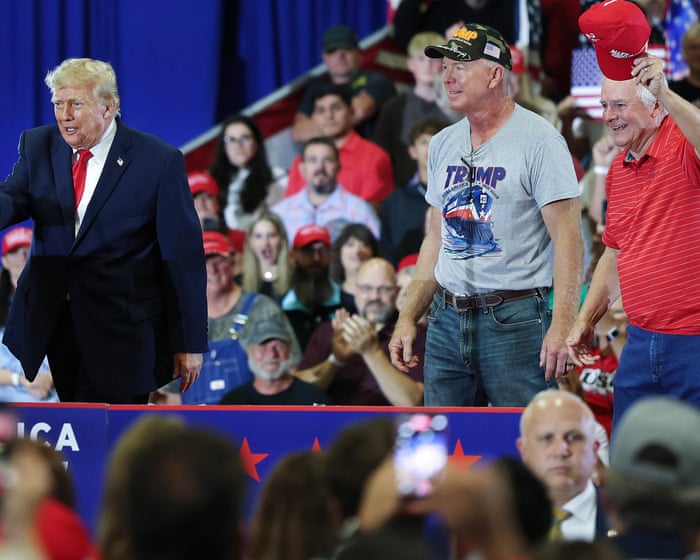
President Donald Trump has embarked on an intensive midterm campaign tour, planning five to seven rallies a week to help Republicans defend their narrow congressional majorities. He opened October with stops in Texas, Oklahoma, Alabama, Ohio and Nebraska — all considered safe Republican territory, a pattern some observers read as a defensive sign rather than confidence.
Political strategist Steve Schmidt described the rallies as both the foundation of Trump's political brand and a potential source of his downfall, arguing that voters are weary of a campaign centered so heavily on the president himself. Polling data from the Associated Press-NORC Center shows only 26% of Americans approve of his handling of the economy, while just 17% approve of his approach to the cost of living. Overall job approval sits at roughly three in ten.
Voter frustration centers on living costs, the war in Iran, and aggressive immigration enforcement. A major Republican political action committee reportedly withdrew funding from North Carolina — the only battleground state Trump has carried in all three of his presidential runs — redirecting resources to the safer state of Kansas instead.
Even longtime loyalists are wavering. A member of Trump's dedicated "front-row" fan community publicly criticized him over his handling of the Jeffrey Epstein investigation and unmet promises regarding the Iran war. A leaked audio recording also captured Texas attorney general Ken Paxton telling donors that Trump's midterm convention in Dallas had dragged down Republican polling numbers.
Trump has largely dismissed the warning signs, focusing instead on White House building projects and blaming former president Joe Biden for inflation. Generic congressional polling currently gives Democrats a lead approaching double digits, raising the possibility of a sweeping loss of Republican control in both chambers of Congress. New Mexico Governor Michelle Lujan Grisham argued that Trump's presence in red states could remind voters of unresolved grievances, including over immigration enforcement by ICE, which she called a serious political and moral liability for the administration.