Earth microbes survive lab-simulated Enceladus ocean conditions
Scientists have shown that deep-sea microbes from Earth can survive in a laboratory brine designed to mimic the ocean beneath Saturn's icy moon Enceladus. The finding strengthens the case that the moon could harbour life.
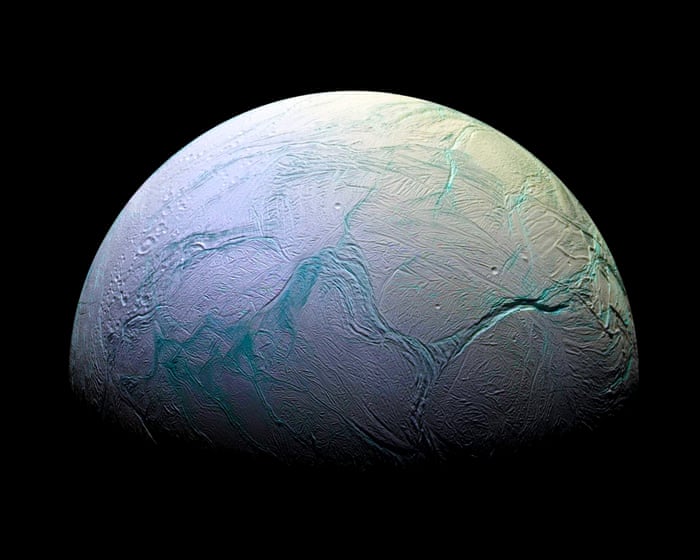
Researchers have recreated a miniature version of Enceladus's hidden ocean in the lab to test whether Earth organisms could survive its harsh chemistry. The results suggest the environment beneath the moon's icy crust may be habitable, even if not especially hospitable.
The team, led by William Orsi, a professor of geomicrobiology at Ludwig-Maximilian University in Munich, used microbes originally collected near deep-sea hydrothermal vents in the Okinawa trough between Japan and Taiwan. These organisms survive by converting hydrogen and carbon dioxide into methane. By mixing water with salts, carbonates and powdered rock, the scientists reproduced both the highly alkaline conditions of Enceladus's ocean and the rock-water reactions believed to generate hydrogen there.
An unexpected tolerance
The microbes grew in the simulated brine despite its pH reaching 11, well beyond the organisms' previously known limits, and even adjusted their metabolism to cope with the low carbon dioxide levels in the solution. The findings appear in the journal Science Advances.
David Rothery, a professor of planetary geosciences at the Open University, said demonstrating that methanogenesis is possible in the simulated ocean removes another barrier to the viability of microbial life on Enceladus. Orsi cautioned, however, that the experiments lasted only days, so it remains unknown whether such organisms could persist for a year, let alone a million years.
A second study by some of the same researchers examined how ice grains in Enceladus's plumes freeze and fragment, separating out the ocean's different components in a way that could concentrate traces of microbial life within a small fraction of ice particles, making them easier to detect. Interest in Enceladus has fuelled support for the European Space Agency's proposed L4 mission, which would pair a Saturn orbiter with a lander touching down at the moon's south pole to search for biosignatures. However, with a launch planned for around 2042, the mission would not reach Saturn until the 2050s.