Venezuela earthquakes expose crumbling legacy of Chávez's revolution
Two powerful earthquakes destroyed the OPPE 25 government housing project, unleashing public fury over the authorities' slow and incompetent response and questioning the legacy of Hugo Chávez's socialist revolution.
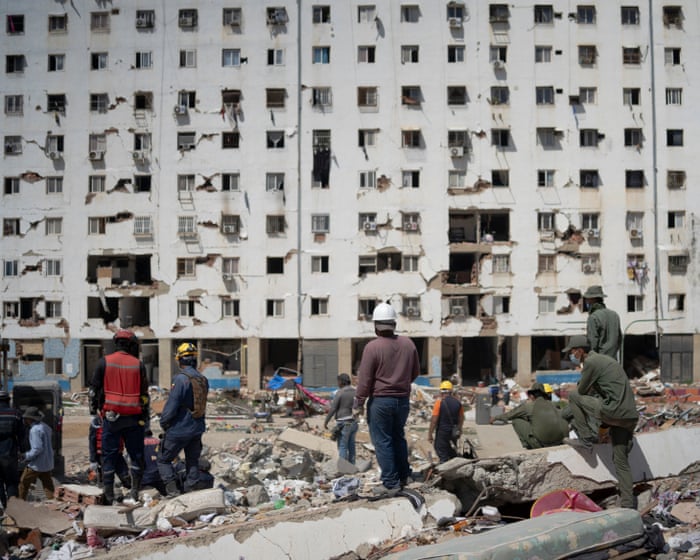
Two powerful earthquakes that struck Venezuela's north coast on June 24 reduced the government housing project OPPE 25 to rubble. The disaster killed at least 4,118 people and injured nearly 17,000. The collapse has not only revealed the fragility of the buildings but also deep-seated mistrust in a government once built on Hugo Chávez's populist "Bolivarian revolution."
Residents who were once fervent Chavistas now voice anger at the authorities' failure to respond. Gabriel González, a 45-year-old construction worker who received an apartment in OPPE 25 in 2013, is still searching for his son Daniel. He says that after Chávez's death and Nicolás Maduro's authoritarian rule, the revolution's ideals faded. "We don't have a government," González says, describing how he and his wife spent 24 hours buried under debris before being rescued.
Acting leader Delcy Rodríguez, who took over after Maduro was abducted by Donald Trump, faces harsh criticism for the sluggish response. Survivors report that help never arrived, and civilians led rescue efforts while security forces stood by. "There are more rifles here than pickaxes and shovels," complains Milagri Rodríguez Guanire, who flew from Chile to search for her mother.
Experts, including former science and technology minister Carlos Genatios, question whether the buildings were properly constructed and whether the government was prepared for such a disaster. He notes that the earthquakes released energy equivalent to 240 Hiroshima bombs. "The revolution was a lie," Genatios concludes.