Welsh coastal dunes reveal fungi that help hold the sand in place
At the start of fungi season, foragers at Bangor University's botanic garden in Wales found more than 200 species in one event. On Anglesey's dunes, fungi help marram grass stabilise the sand.
Fungi season has begun in the United Kingdom. At the annual fungus foray at Bangor University's Treborth Botanic Garden in Wales, 225 participants recorded more than 200 species in just 90 minutes. The account comes from nature writer Nigel Brown, in The Guardian's Country diary column.
One find was new to the author after 50 years of foraying: the orange ping-pong bat fungus (Favolaschia calocera), glowing on a fallen twig. Climate change is linked to its rapid spread worldwide, and it was first recorded in the UK only in 2012.
Fungi in the dunes
At the author's home on Anglesey (Ynys Môn), the range of fungi is remarkable, including in unexpected places such as sand dunes, one of the island's defining habitats in both scale and ecological importance.
Aberffraw Dunes on the west coast are treeless, exposed and constantly shifting. Even so, fairy rings of two species, a parasol (Macrolepiota mastoidea) and the champignon (Marasmius oreades), patterned the links, while damper hollows held fibrecaps (Inocybe) and webcaps (Cortinarius), both of which can be highly toxic.
Above the beach, marram grass (Ammophila arenaria) dominates. It is the only plant on earth able to stabilise sand and build tall dunes. Its underground stems keep pace with the encroaching dunes, but without fungi to help it extract vital minerals and nutrients from the sand, it would starve and be buried.
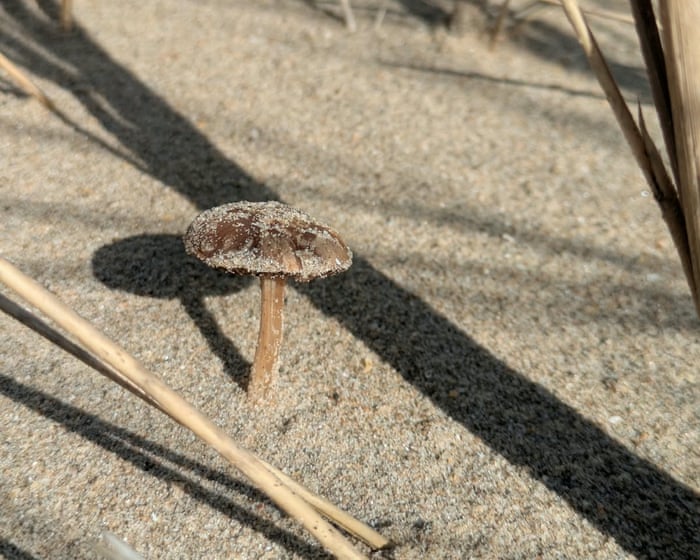
Between the marram clumps, the author found scores of salt-resistant dune brittlestems (Psathyrella ammophila). It grows only alongside marram and breaks down the plant's constant supply of dying roots, recycling them for the next phase of growth. Other, much smaller mycorrhizal fungi also assist, each specialised in finding organic material for their host plant.
Recognition for fungi
This year the word “funga”, an equivalent to flora and fauna, has been adopted by both the Cambridge Dictionary and negotiating parties at the forthcoming Cop17 conference. The author sees this as fungi finally receiving the status they deserve.


