Ukrainian Strikes Have Disabled Half of Russia's Oil Refining Capacity, Zelenskyy Vows to Intensify Attacks
Ukraine's defense minister says long-range strikes have taken 51% of Russia's oil refining capacity offline, while President Volodymyr Zelenskyy says Kyiv will step up such attacks in response to a new Russian winter strategy targeting civilian infrastructure.
Strikes on refineries
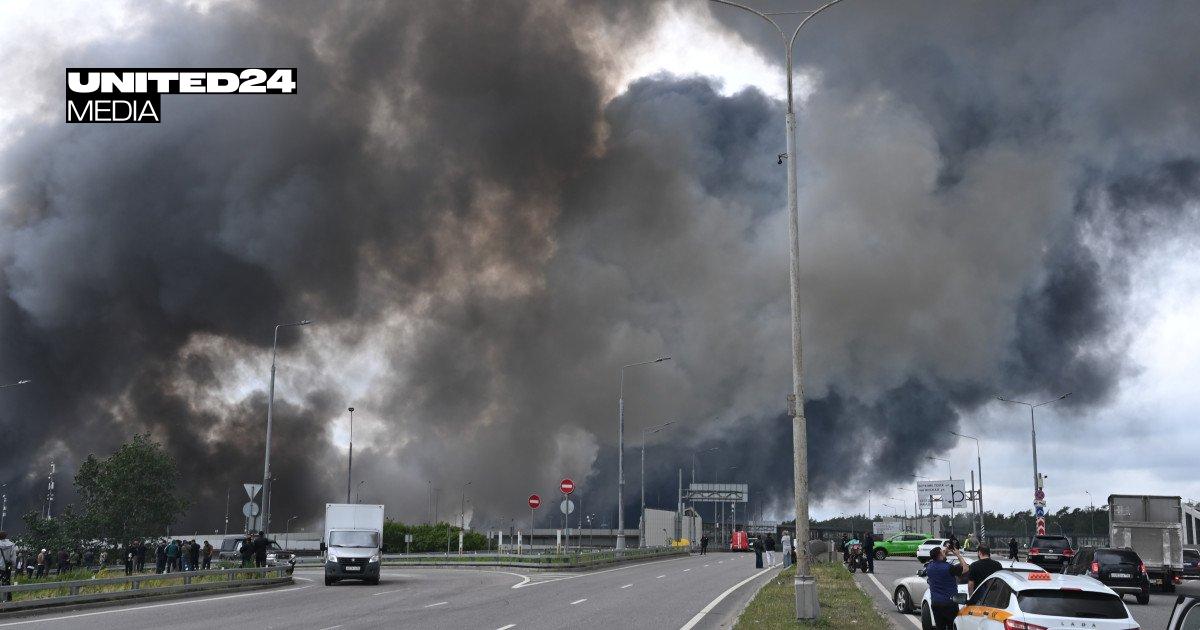
Ukraine's Defense Minister Yevhen Khmara said on October 4 that Ukrainian long-range strikes have knocked more than half — 51% — of Russia's oil refining capacity out of operation. According to United24 Media, recent strikes have hit several Russian refineries and related facilities, including plants at KINEF, Ust-Luga, Moscow, Yaroslavl, Perm, Ilsky, Saratov and Syzran.
Khmara said the effect of these strikes is not always immediately visible, but their cumulative impact is increasingly undermining Russia's ability to sustain the war. He described the 51% figure as a major blow to the Russian economy, its capacity to wage aggression, and its ability to supply its forces, calling it the result of "carefully planned, consistent and systematic" operations to drain Russia's war machine. He added that deep strikes continue to bring the war onto Russian soil.
The ministry said production and procurement of long-range strike drones has tripled this year and will keep expanding. Overnight on October 2, Ukrainian forces also struck a facility in Russia's Samara region; open-source analysts and the Russian outlet ASTRA reported that a fire broke out at what is believed to be the Samara oil pumping and dispatch station.
Zelenskyy: a response to Russia's winter strategy
The Guardian reports that President Zelenskyy has said Ukraine will increase strikes on Russian oil refineries while continuing to avoid civilian targets. He said Ukraine's intelligence service had obtained documents showing that Russian leader Vladimir Putin issued a new doctrine ahead of winter authorizing attacks on a broader range of civilian targets — infrastructure, logistics, roads, schools and hospitals — intended to pressure residents into leaving Kyiv and other cities. "We have to respond in any way we can. With their attacks on our energy, we have to respond on their energy — first of all, oil refineries, which fund this war for them," Zelenskyy said, stressing Ukraine would not strike civilian objects.
Russian attacks on Saturday killed at least six people in Ukraine and damaged Kyiv's Northern Bridge, disrupting traffic for a third day. Zelenskyy said Ukraine's counteroffensive, codenamed Vivaldi, had recaptured about 140 square kilometers in the Donbas region. He also pointed to shortages of ammunition for Ukraine's F-16 and MiG fighters, which shoot down roughly 60% of Russian jet-powered drones, and said Ukraine had begun deploying its domestically produced FP-7 ballistic missile, with a longer-range FP-9 model hoped for by autumn.
German Chancellor Friedrich Merz visited Kyiv on Sunday with executives from German defense companies to show support for Ukraine. Meanwhile, exit polls in Latvia's parliamentary election pointed to a win for Prime Minister Andris Kulbergs's pro-Ukraine United List party, suggesting the country will maintain its pro-European course, even as populist parties also performed well.