Ukraine's PM: Government preparing for worst-case internet loss scenario
Ukrainian Prime Minister Serhiy Koretsky said targeted Russian strikes on data centers pose a constant risk to internet access, prompting the government to prepare alternative solutions to protect critical infrastructure.
Ukrainian Prime Minister Serhiy Koretsky said in an interview with the program "TSN.Tyzhden" that targeted Russian strikes on data centers create a persistent risk of the country losing internet access. He stressed that the government is preparing for the worst possible scenario when planning protection of critical infrastructure.
Koretsky was commenting on recent discussions at a meeting of the Staff of the Supreme Commander-in-Chief regarding Russian attacks on telecommunications facilities. He noted that the threat to all critical infrastructure will remain as long as the full-scale war continues.
Unconventional solutions
According to the prime minister, the Cabinet of Ministers is applying several approaches to preserve digital data and equipment. Part of the infrastructure is being moved underground, another part is placed in cloud storage, and some is physically relocated abroad. Depending on need, these three methods can also be applied simultaneously.
Koretsky noted there is no single universal rule for protecting such facilities, but the government is continuously building protection while accounting for the worst-case scenario.
Background
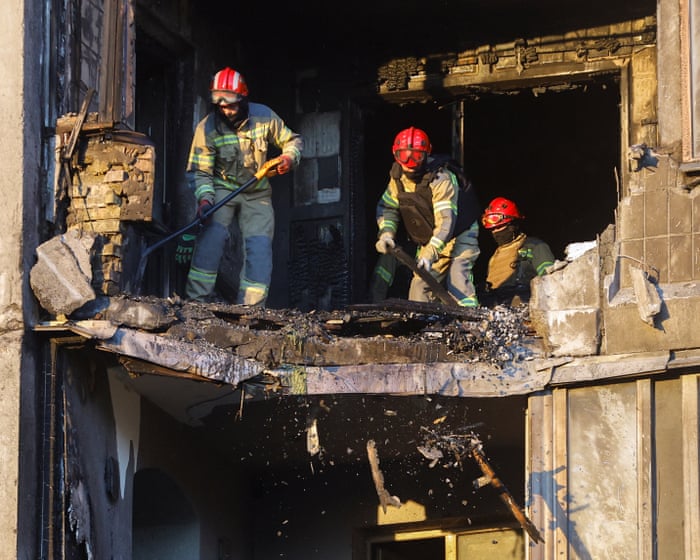
Between September 23 and 25, Russian forces carried out a series of targeted strikes on Ukrainian data centers UTELS, MiroHost and DATAGROUP, as well as communication hubs. The strikes destroyed or damaged equipment belonging to several Kyiv-based internet providers and major telecommunications companies. As a result, hundreds of thousands of subscribers in the capital, Kyiv region and other parts of the country temporarily lost internet access.
Following these events, President Volodymyr Zelensky held a meeting of the Staff of the Supreme Commander-in-Chief, after which officials and heads of special services were instructed to implement additional measures to protect the country's telecommunications infrastructure.