Thomas Jefferson and the Broken Promise
US founding father Thomas Jefferson failed to honor the last will of his friend, Polish general Thaddeus Kosciuszko, who wanted his fortune used to free and educate Jefferson's slaves.
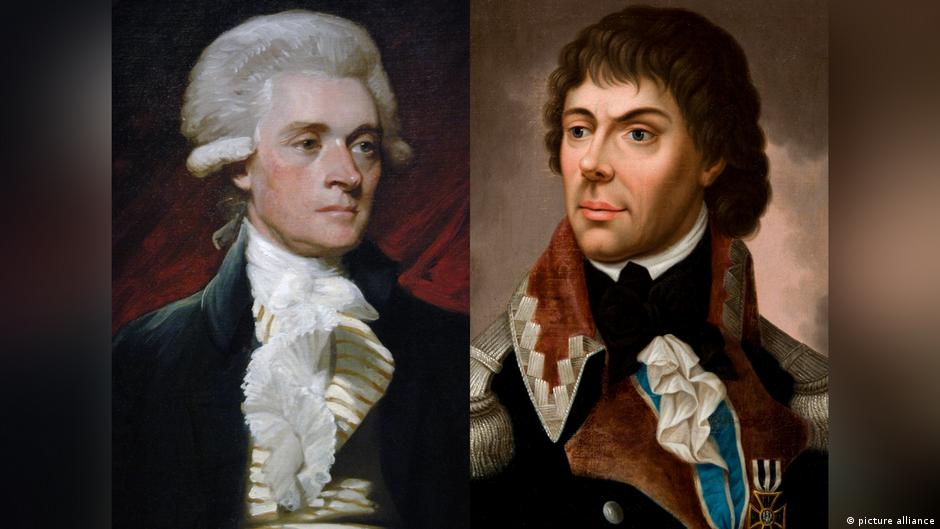
Thomas Jefferson, author of the Declaration of Independence and third US president, is remembered as a founding father, but his legacy has a darker side that has drawn increasing scrutiny. Central to this is his relationship with Thaddeus Kosciuszko, a Polish military engineer who played a key role in the American Revolutionary War.
Jefferson met Kosciuszko in 1780, but their friendship deepened in 1797 after Kosciuszko was released from Russian imprisonment and arrived in Philadelphia, then the US capital. Jefferson, then vice president, called him "as pure a son of liberty as I have ever known."
In 1798, before leaving America permanently, Kosciuszko asked Jefferson an extraordinary favor. He would leave behind his US fortune and wanted it used after his death to free and educate Jefferson's slaves. Kosciuszko was a fierce opponent of serfdom and slavery, and during the war he had conspicuously chosen a Black soldier as his adjutant.
Kosciuszko died in Switzerland in 1817. Two years later, in May 1819, Jefferson appeared before a Virginia court with the will. He declared himself unable to execute Kosciuszko's last wishes and asked the court to appoint another executor. Despite assuring Kosciuszko in a February 1810 letter that he would keep his promise, the will was never carried out. After decades of legal battles, the US Supreme Court awarded the estate to Kosciuszko's European heirs in 1852.
Historians disagree on Jefferson's motives. Henry Wiencek, author of a critical biography "Master of the Mountain: Thomas Jefferson and His Slaves," believes Jefferson did not want to free his slaves because they were more valuable than the money from the Polish general's will. Executing it would have destroyed his luxurious lifestyle and status among the slaveholding elite.
Harvard law professor Annette Gordon-Reed argues that Jefferson faced legal difficulties. Kosciuszko had written other wills in Europe after leaving the US, and Jefferson, an experienced lawyer, recognized that years of litigation were inevitable. She notes Jefferson was 75 at the time and did not want to take on such a problem.
Journalist Alex Storozynski, an expert on Kosciuszko, dismisses the other wills as an excuse. If Jefferson had carried out the wishes, he would have been at the forefront of the movement to abolish slavery, but he shied away from that position.
In Washington's Lafayette Square, a statue of Kosciuszko in American uniform gazes at the White House. Author Wiencek finds this ironic: measured by their commitment to liberty and equality, the Polish military man Kosciuszko may have been a greater American than founding father Jefferson himself.