Teperik: Ida-Viru County Should Be Pro-Estonian, European and Successful
Security and societal resilience specialist Dmitri Teperik urges that Estonia's Ida-Viru County be judged by its progress rather than its shortcomings. He argues that the next decade is being decided within the next year and a half, as the 2028–2034 national partnership agreement takes shape.
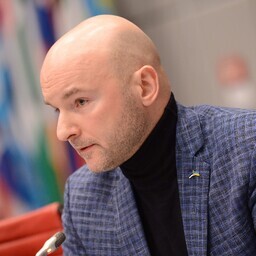
Dmitri Teperik, who has worked on security and societal resilience in Estonia, Ukraine and elsewhere, has published an opinion piece about the future of his home region, Ida-Viru County. In his view, the region is often described as a border area that is industrial, Russian-speaking and shrinking, but such labels describe the present situation rather than the direction of travel. When a region is portrayed mainly through its shortcomings, he argues, it receives temporary relief measures instead of long-term investment.
The myth of passivity
The author points to studies conducted in the region that challenge the notion of local passivity: helping neighbors and informal mutual support are part of everyday life. What is missing, he says, is not willingness but safe, welcoming meeting places and trusted channels through which that willingness can turn into decisions. The civic initiative "Ida-Viru Future 2050" built its vision through public discussions, seminars, study visits, expert consultations and community workshops.
A window for decisions
The national spatial plan "Estonia 2050" names the Ida-Viru urban area, made up of Jõhvi, Kohtla-Järve, Narva and Sillamäe, as one of three regional urban centers alongside Tartu and Pärnu, and as a key area for the energy and economic transition. Teperik notes that the state's own analysis treats the eastern border region's challenges as a matter of national security and societal resilience. Key choices will come together in the national partnership agreement for 2028–2034. The previous window of this kind opened in 2021, and the next will not open until 2035.
Three goals
Teperik wants the county to be pro-Estonian, European and successful by 2050. That means residents feeling ownership of the country, a well-kept public space and working public transport, and a county where people come to live, study and work rather than leave. As one opportunity to strengthen the European dimension, he cites Narva's bid to become a European Capital of Culture.
The "Ida-Viru Future 2050" vision has produced the Ida-Viru County Renewal Charter, with concrete proposals on investment, housing, skills, services and community development. Each comes with a measurable outcome to be reached by the end of 2028. The charter is nonpartisan and addressed to all political forces involved in major development decisions.