Spain introduces border checks on travel from Italy amid escalating migration row
Spain has begun month-long border controls on flights and sea crossings from Italy in response to similar Italian measures introduced after roughly 78,000 migrants reached the Spanish exclave of Ceuta from Morocco. The dispute has strained relations between the two governments.
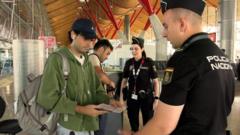
Spain began checking passengers arriving from Italy by air and sea at midnight, with the controls set to remain in place for a month. The move follows Italy's introduction of comparable restrictions a week earlier, prompted by an influx of roughly 78,000 migrants who crossed from Morocco into the Spanish exclave of Ceuta.
Spanish officials say between 5% and 10% of passengers are having their documents checked before disembarking, and Italy likewise describes its checks as random. Even so, some travellers have reported that entire planeloads of passengers were required to show identification.
A political dispute
The standoff has deepened tensions between Spain's socialist prime minister, Pedro Sanchez, and Italy's conservative leader, Giorgia Meloni, who has long pushed for tougher EU migration policy. Although Italy has no land border with Spain, its government suspended the Schengen free-travel arrangement last week, saying it wanted to stop any Ceuta migrants from later travelling on to Italy. Madrid rejected that justification as baseless, noting migrants who entered Ceuta had no route into the wider Schengen area.
Spain demanded Italy lift its checks by Sunday, but Rome said the measures would remain until at least 15 August, when it expects Spain to face a fresh wave of arrivals. Spain's own controls are due to stay in force until 7 September.
Italy's decision won backing from Finland and Denmark, while the Czech Republic called for Spain's Schengen membership to be temporarily suspended.
Situation in Ceuta
Most of the migrants who reached Ceuta were returned within days, though roughly a hundred people are believed to have died during the crossing. Nearly 1,400 minors, including very young children, remain in the enclave. BBC Arabic identified numerous Facebook posts encouraging a further crossing attempt in mid-August, and Meta said it had removed posts breaching its policies. Spanish authorities say they are not currently anticipating a repeat of last week's events.
/nginx/o/2026/01/09/17380420t1hb1fb.jpg)

/nginx/o/2026/09/28/17944290t1h9b26.jpg)