Spain battles one of its deadliest wildfires as at least 12 killed
A fast-spreading wildfire in Spain's Andalusia region has killed at least 12 people, making it one of the deadliest in Spanish history. Several victims are believed to be British nationals.
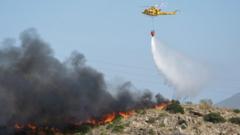
A wildfire in the Los Gallardos area of Andalusia, southern Spain, spread rapidly on Thursday afternoon due to soaring temperatures, dry ground, and strong winds. The cause is believed to be a fallen power line, although local electricity companies have denied responsibility. At least 12 people have died, making this one of the deadliest wildfires in Spanish history.
Four victims were found dead in a burnt-out car. Antonio Sanz, Andalusia's health and emergencies minister, said they were believed to be "of British origin" because the car had a steering wheel on the right. The Spanish authorities and the UK Foreign Office have not released the identities of the deceased.
Lucinda Curtois, a British tourist who arrived in Spain on Thursday with her partner and two teenage children for a holiday, described escaping from Bedar. She said: "It was almost like there was a mushroom cloud of smoke, it was like a bomb had gone off." Curtois told the BBC she fears at least two other UK nationals have been killed. Officials in Bedar said some victims did not follow the recommended evacuation route, but it is unclear how well that guidance was communicated.
Belgian Foreign Minister Maxime Prévot said many Belgians have second homes in Spain and consular services are trying to contact those with whom they have lost touch. Weather conditions are expected to improve on Saturday, with moderate winds and cooler air, according to AEMET, Spain's national weather agency.
This wildfire is among the deadliest in Spanish history. In 1984, 20 people died in a fire on the Canary Island of La Gomera, and in 1979, 21 people, including nine children, died in a forest fire near Lloret de Mar in northeastern Spain.
Climate change is driving up global temperatures, and Europe is the fastest-warming continent, heating at twice the global average, according to the Copernicus climate service. This leads to more intense heatwaves, water stress, and severe wildfires.