Drought shrinks Italy's Po river, threatening farms and water supplies
Northern Italy's Po river is running exceptionally low, with several monitoring stations nearing or exceeding records set during the 2022 drought. The falling levels are straining agriculture and forcing tanker water deliveries to over 100 municipalities.
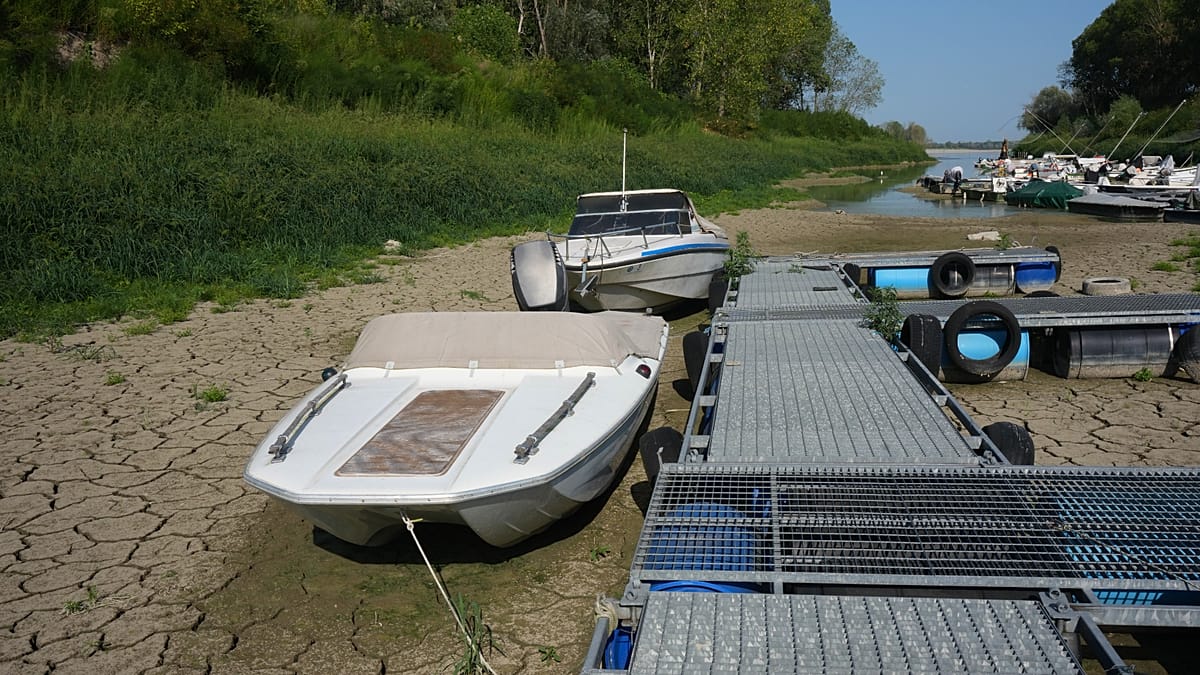
Northern Italy's Po river is experiencing a sharp drop in water levels, raising concerns for both farmers and water utilities. At the point where the Po meets the Ticino river, boats now sit in shallow, muddy water surrounded by sandbanks, algae and exposed gravel.
The Po River Basin Authority reports that flows at several monitoring stations are well below seasonal averages, with some approaching or exceeding the records set during the severe drought of 2022.
Agriculture and water supplies under strain
The Po is a vital water source for northern Italy's agricultural heartland, including the so-called Food Valley around Parma, where fruit, vegetable and rice production depends on the river. According to the Ansa news agency, the exceptionally low levels are also affecting drinking water supplies, with tanker deliveries now reaching more than 100 municipalities in the Piedmont and Lombardy regions.
Near Pavia, the river has narrowed to a shallow channel, exposing large stretches of riverbed and making navigation increasingly difficult for leisure boats and rowing clubs. In the rice-growing Lomellina area, officials warn the situation could worsen without substantial rainfall, pushing farmers to rely more heavily on groundwater and emergency measures.
Further downstream near Parma, tributaries and irrigation canals that serve intensive fruit and vegetable farming are also running low. Farmers say water rationing is already disrupting irrigation schedules, while the basin authority has flagged the stretch below Piacenza as particularly vulnerable, as dropping water levels expose tree trunks and other debris.
Turin's shrinking river
In Turin, the Po has been reduced to a slow-moving channel covered in algae. Municipal crews are using excavators mounted on barges to clear dense growth of invasive aquatic plants near the city centre. Regional data shows the river's flow through Turin has fallen by more than half since June, while at the Sant'Antonio island monitoring station further downstream, discharge has at times dropped to roughly a quarter of normal levels.
Officials warn that heat combined with low water is accelerating algae growth and the spread of invasive species, disrupting both navigation and recreation. The prolonged heatwave has also intensified drought and wildfires elsewhere in Europe, adding further pressure on water resources across the continent.