Rinkēvičs: Border Guard needs up to 200 additional staff for rapid response
After visiting the Latvia-Belarus border, President Edgars Rinkēvičs said the State Border Guard needs more personnel to make full use of new technology and respond quickly to incidents.
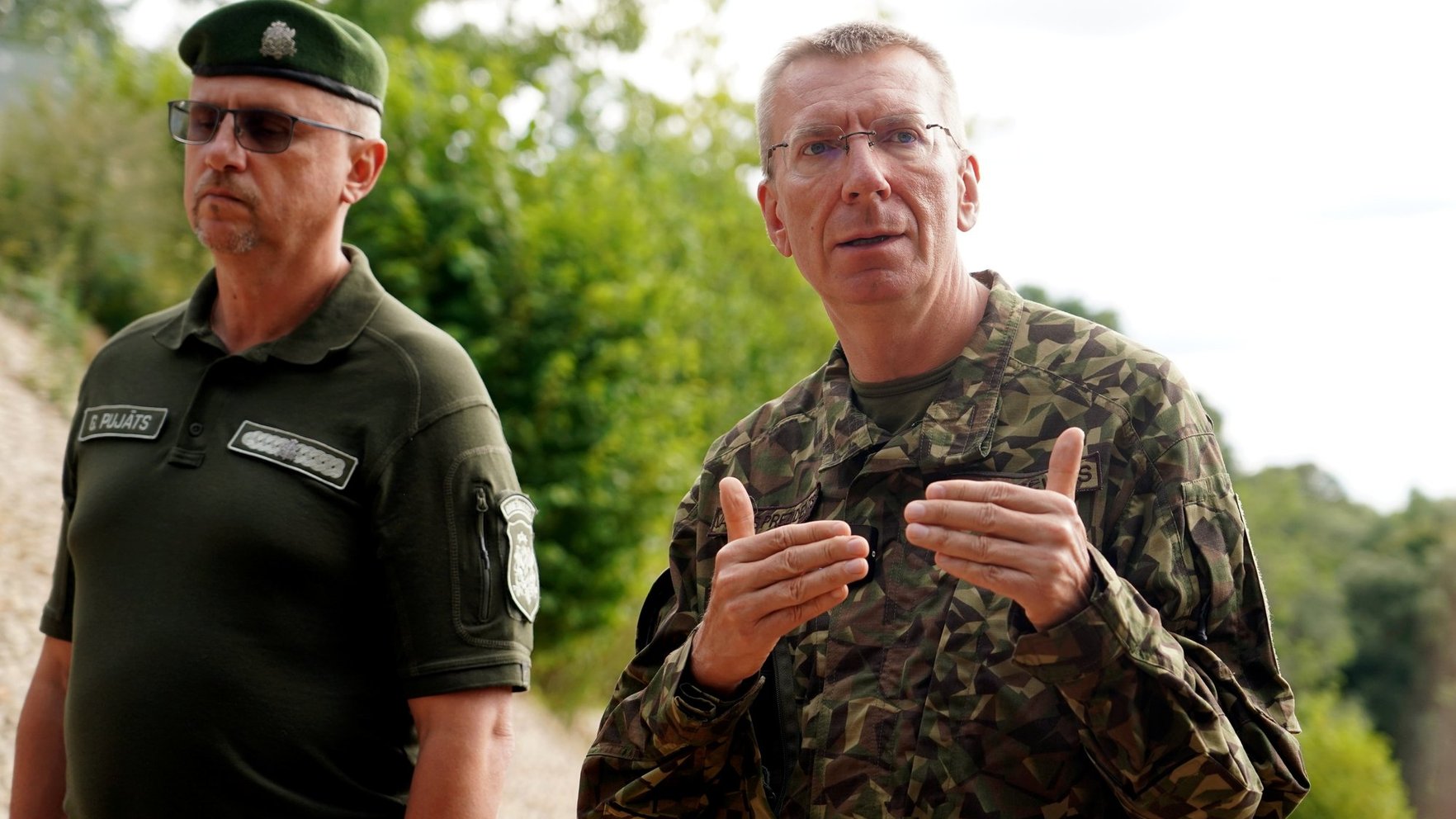
President Edgars Rinkēvičs, together with State Border Guard chief Guntis Pujāts and National Armed Forces commander Lieutenant General Kaspars Pudāns, visited sections of the Latvia-Belarus border under the Border Guard's Daugavpils administration on Monday.
According to presidential adviser Mārtiņš Drēģeris, Rinkēvičs confirmed that the border with Belarus will be equipped with technology for more effective control by the end of the year. However, the president stressed that fencing, sensors and cameras alone are not enough — border guards are also needed who can respond quickly when infrastructure is damaged. For that reason, the service needs up to 200 additional staff, otherwise investment in technology will not pay off in practice.
Public should be ready for provocations
Rinkēvičs repeated that the public must be prepared for various provocations, including sabotage and subversion, even though the country's air defence has improved. He said a balance must be found between alarm and indifference — while the emergency cell broadcast alert system irritates some residents, it remains a necessary tool for warning and information.
Election year and hybrid warfare threats
The president noted that pressure on the border is increasing in a year when Latvia holds elections, as the regimes of Belarus and Russia try to sow distrust by suggesting the state's authorities, armed forces and border and security services cannot cope with the pressure — part of an ongoing hybrid warfare campaign. Asked about US warnings of possible Russian sabotage on NATO territory, Rinkēvičs noted such incidents are already happening, citing the State Security Service's investigation into the arson of a warehouse belonging to the association "Tavi draugi".
During the visit, the president reviewed the current border situation, measures against irregular migration pressure, technical equipment, and planned anti-mobility measures, as well as scenarios for restricting rail traffic at the "Indra" border checkpoint. Cooperation with the border guard services of Finland, Estonia and Lithuania was also discussed. Progress on strengthening border security will be reviewed at the National Security Council meeting on August 19.


/nginx/o/2026/10/04/17954707t1he10e.jpg)