Plan to erase Russian and Belarusian place names from road signs sparks online debate
A Transport Ministry proposal to fix or replace 235 road signs in order to remove Russian and Belarusian place names has triggered mixed reactions online. The work is estimated to cost around €120,000, and the government has postponed approving the plan.
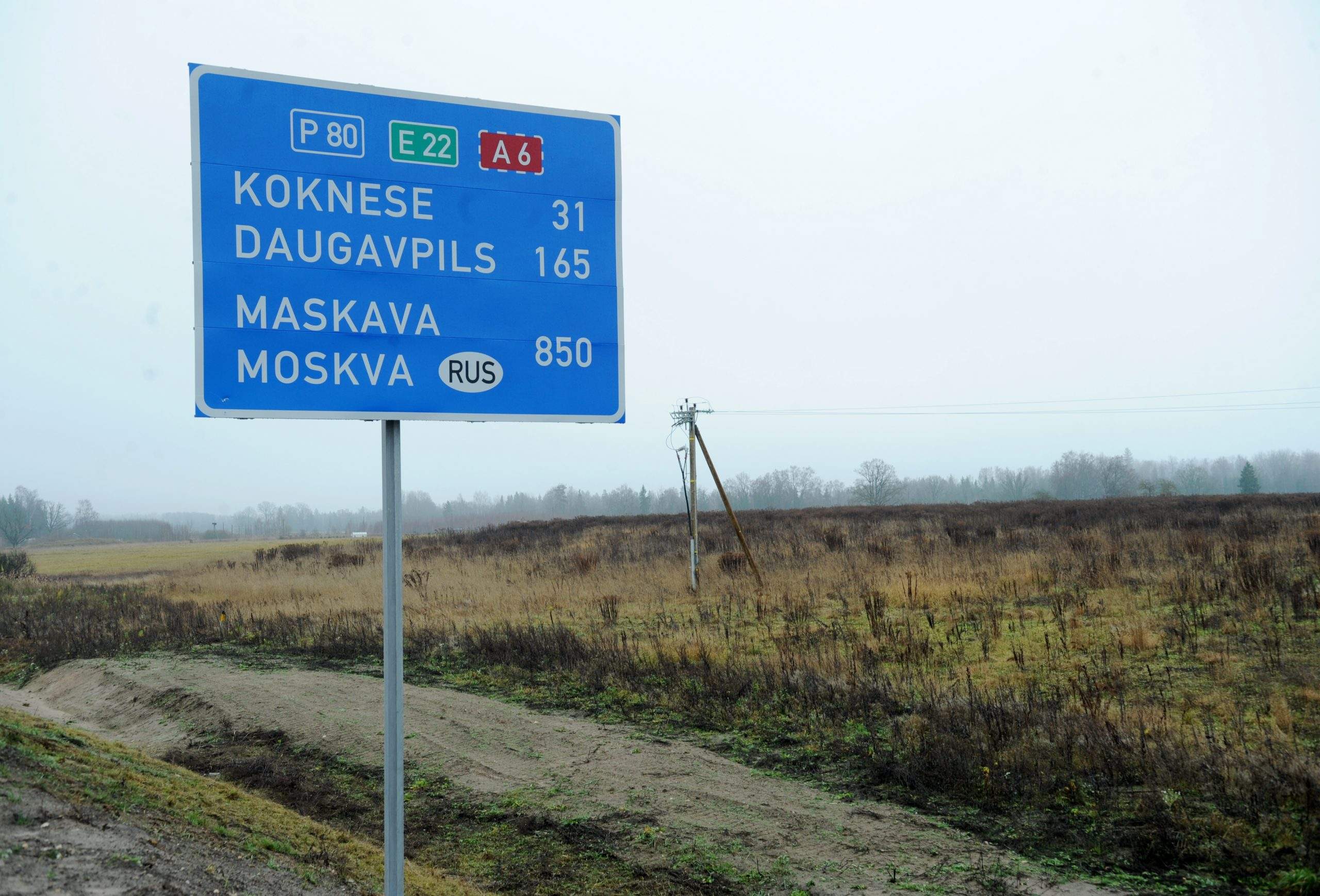
An online debate has erupted over a Transport Ministry (SM) proposal to repair or replace road signs in order to remove place names belonging to aggressor states Russia and Belarus. The discussion began after a social media post pointed to the estimated cost of the work — around €120,000 — and questioned what practical benefit it would bring to residents.
Criticism and irony
Some commenters noted that in several cases only the place names had been painted over, while distance figures on the same signs were left untouched, prompting confusion and sarcastic comparisons online. Others argued the initiative does nothing to address everyday problems such as potholes or long waits to see doctors, questioning its practical value.
Support for the initiative
At the same time, some residents backed the plan, arguing that the name of an aggressor state has no place on Latvian roads regardless of practical gain, and that cost should not be the deciding factor.
Numbers and the ministry's plan
According to the ministry, 235 signs bearing Russian and Belarusian place names have been identified on state roads, with another 78 found on Riga city streets near several highway entrances, and five more in Daugavpils. Total costs, including VAT, are estimated at around €120,000, covering partial repair of larger signboards, full replacement of individual signs, and traffic management during the work. The ministry proposed carrying out the work gradually, using existing road maintenance budgets and starting with the most worn-out signs. The government, however, has postponed approving the report, asking for clarified timelines and cost calculations. The ministry also warned that amateur covering or painting of signs at night can damage their reflective coating and visibility, making a standardized, safety-conscious solution necessary.
/nginx/o/2024/06/09/16135774t1hff74.png)

/nginx/o/2026/09/27/17941064t1hab4a.jpg)